The legal education landscape is shifting, and CLAT 2027 brings fresh challenges that demand a smarter approach to preparation. Understanding the CLAT 2027 Syllabus Decoded: Key Changes, Trends, and Smart Prep Strategies isn’t just about knowing what to study—it’s about recognizing how the exam is evolving and adapting your preparation accordingly.
Here’s the reality: CLAT 2027 continues to emphasize analytical thinking over rote memorization, with subtle but significant shifts that could make or break your preparation strategy. The exam pattern remains consistent with previous years, but the depth and application of concepts are becoming more sophisticated[5].
Your success is our mission at Lawgic Coaching, and we’ve analyzed every detail of the updated syllabus to help you navigate these changes effectively. Let’s break down what you need to know and how to prepare strategically for success.
Key Takeaways
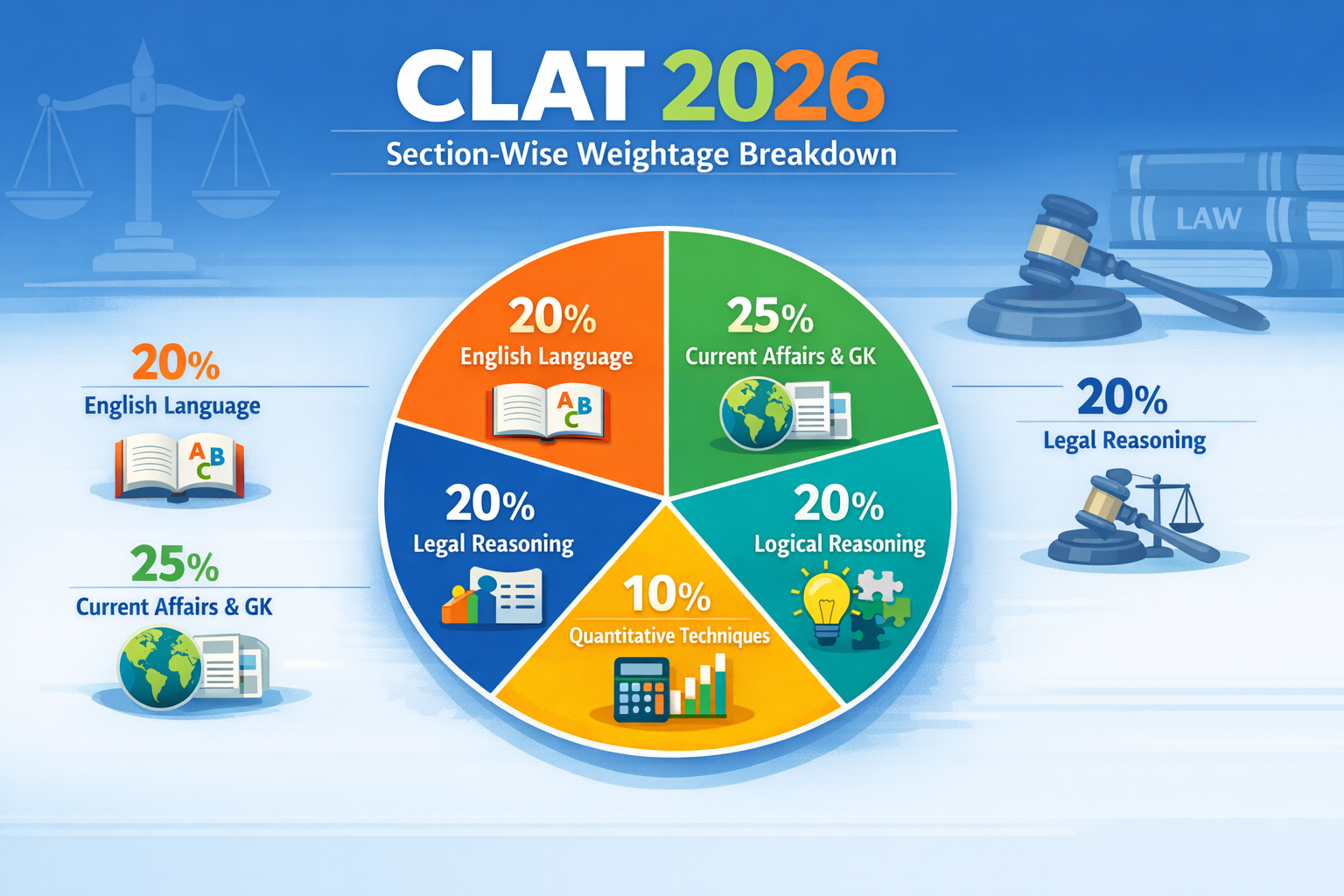
• Section weightage remains stable: English Language (20%), Current Affairs & GK (25%), Legal Reasoning (20%), Logical Reasoning (20%), and Quantitative Techniques (10%)[4] • Analytical legal reasoning takes center stage with increased focus on case law applications and real-life scenario-based problems[1][3] • Contemporary legal issues including AI in law, global treaties, and legal ethics are gaining prominence in question patterns[1] • Quantitative techniques stay elementary with Class 6-10 level arithmetic and 1-2 step calculations[7] • Smart preparation strategies must balance comprehensive coverage with targeted practice on emerging trends
Understanding the CLAT 2027 Syllabus Structure
Core Exam Framework
CLAT 2027 maintains its established structure as a 2-hour computer-based test featuring 120 multiple-choice questions, each carrying 1 mark with a 0.25 mark deduction for incorrect answers[5]. This format demands both accuracy and strategic time management.
The five core sections continue to form the backbone of the examination, but understanding their evolving nature is crucial for effective preparation. Each section now emphasizes comprehension and application over mere factual recall, reflecting the legal profession’s demand for analytical thinking.
Flexible learning that fits your life becomes essential when tackling this comprehensive syllabus. The key lies in understanding not just what to study, but how each section interconnects with legal reasoning and practical application.
Section-wise Weightage Analysis
The weightage distribution provides a clear roadmap for time allocation during preparation[4]:
| Section | Weightage | Questions | Strategic Focus |
|---|---|---|---|
| Current Affairs & GK | 25% | ~30 questions | Highest weightage demands daily reading |
| English Language | 20% | ~24 questions | Foundation for all passage-based sections |
| Legal Reasoning | 20% | ~24 questions | Core competency for law school success |
| Logical Reasoning | 20% | ~24 questions | Critical thinking development |
| Quantitative Techniques | 10% | ~12 questions | Quick scoring opportunity |
This distribution reveals why a balanced approach works better than focusing heavily on any single section. Expert guidance without the premium price tag helps you optimize this balance effectively.
CLAT 2027 Syllabus Decoded: Section-wise Changes and Trends
English Language Evolution
The English Language section continues to feature passages of approximately 450 words each, maintaining the 12th-standard reading level[5]. However, the complexity of comprehension questions is increasing, with greater emphasis on inference, tone analysis, and contextual understanding.
Recent trends suggest a potential reintroduction of grammar-based questions, including cloze tests and sentence correction exercises[1]. While this remains speculative, preparing for diverse question types strengthens overall language skills.
Reading strategies must evolve beyond basic comprehension. Focus on:
- Critical analysis of author’s perspective and bias
- Vocabulary in context rather than isolated word meanings
- Inference skills for questions requiring reading between the lines
- Time management for 450-word passages within strict time limits
For comprehensive English preparation strategies, explore our detailed CLAT English preparation guide that covers advanced techniques for passage analysis.
Current Affairs and General Knowledge Transformation
With 25% weightage, this section demands the most strategic preparation[4]. The focus has shifted toward legal current affairs, constitutional developments, and contemporary policy issues rather than general trivia.
Contemporary themes gaining prominence[1]:
- AI and technology in legal systems
- Global treaties and international law developments
- Legal ethics and professional conduct cases
- Supreme Court and High Court landmark judgments
- Government policy changes affecting legal framework
The passages now integrate current affairs with legal reasoning, requiring students to analyze news events through a legal lens[5]. This trend reflects the exam’s evolution toward testing legal aptitude rather than general awareness.
Proven strategies that actually work for current affairs preparation include:
- Daily newspaper reading with legal news focus
- Monthly compilation of legal developments
- Integration of current affairs with legal reasoning practice
- Regular mock tests emphasizing recent developments
Legal Reasoning: The Heart of CLAT 2027
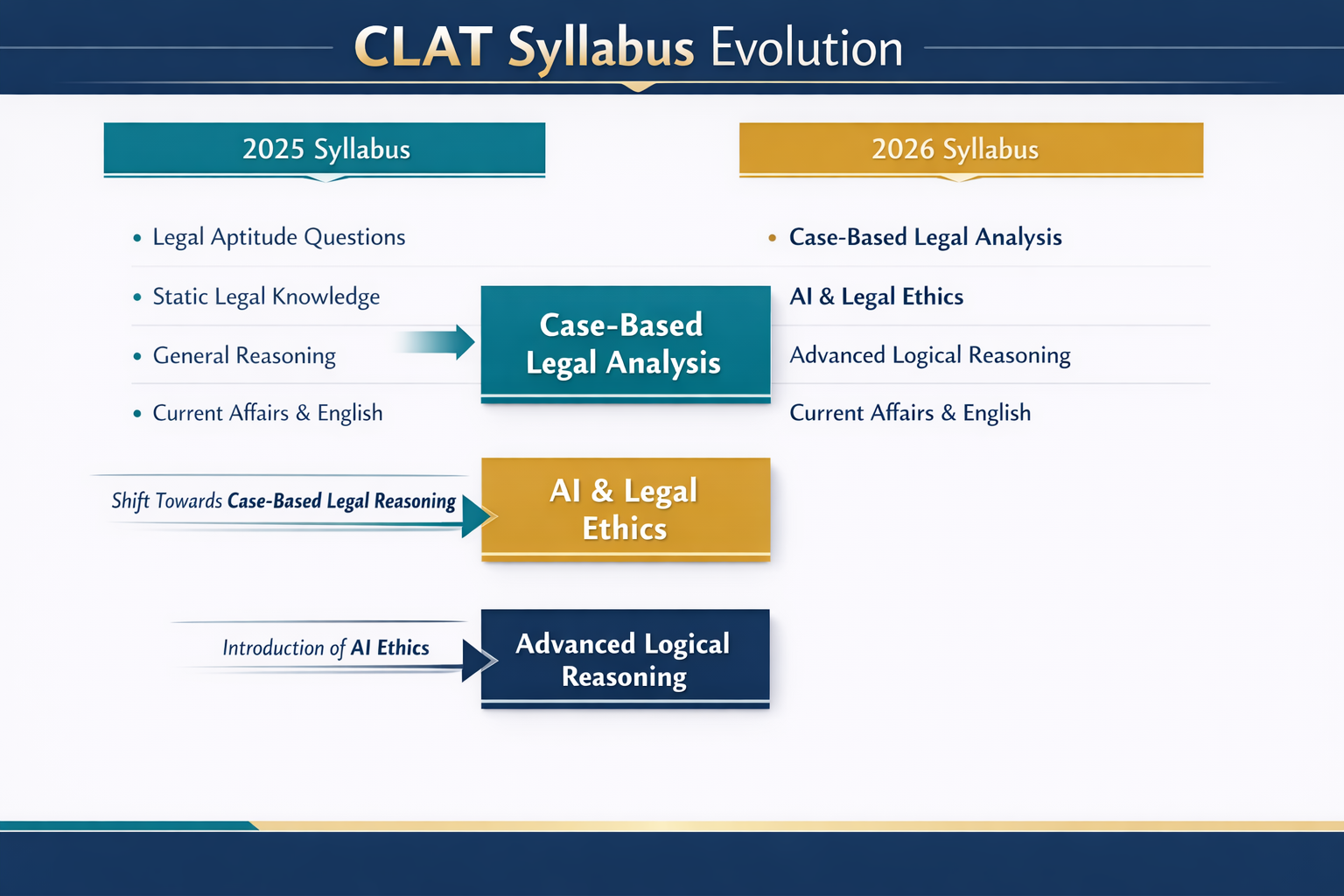
Legal Reasoning continues to carry 20% weightage but shows the most significant qualitative changes[4]. The emphasis has shifted dramatically toward analytical legal reasoning with case law applications and real-life scenario-based problems[1][3].
Key transformation areas:
- Case-based reasoning requiring application of legal principles to new situations
- Fact-situation analysis testing practical legal problem-solving
- Constitutional law scenarios involving fundamental rights and duties
- Contract and tort principles applied to everyday situations
- Legal ethics dilemmas requiring moral and professional judgment
The passages derive from fact situations, public policy questions, or moral philosophical enquiries, with no requirement for prior legal knowledge beyond passage comprehension[5]. This approach tests natural legal aptitude and analytical thinking.
Real mentors from top NLUs emphasize that success in this section requires developing a legal mindset rather than memorizing legal facts. Practice with diverse case studies and fact patterns builds this analytical capability.
For those seeking comprehensive legal reasoning strategies, our complete CLAT preparation guide offers detailed approaches to developing legal analytical skills.
Logical Reasoning: Consistency with Innovation
Logical Reasoning maintains its 20% weightage with traditional topics like relationships, analogies, logical sequences, and arguments[4]. However, the complexity and application-oriented nature of questions continue to increase.
Emerging patterns include:
- Multi-layered reasoning chains requiring several logical steps
- Data interpretation combined with logical analysis
- Assumption and conclusion questions with legal contexts
- Argument evaluation skills applicable to legal reasoning
The section increasingly mirrors legal thinking patterns, preparing students for law school analytical requirements. Personalized attention you deserve helps identify and strengthen specific logical reasoning weaknesses.
Quantitative Techniques: Stable and Strategic
Quantitative Techniques remains the most predictable section, limited to Class 6-10 arithmetic with 1-2 step calculations[7]. The syllabus includes ratios, proportions, basic algebra, mensuration, and statistics without complex mathematical operations.
Strategic approach for maximum efficiency:
- Focus on speed and accuracy rather than advanced concepts
- Practice mental calculation techniques for time-saving
- Master percentage and ratio problems common in legal contexts
- Develop data interpretation skills for statistical information
This section offers a quick scoring opportunity for students who maintain regular practice without over-investing time. The key is consistent practice rather than intensive study.
For specific mathematical preparation, check our recommended mathematics resources tailored for CLAT requirements.
CLAT 2027 Syllabus Decoded: Smart Preparation Strategies
Strategic Study Planning
Effective CLAT preparation requires a systematic approach that balances comprehensive coverage with focused practice on emerging trends. Study at your own pace while maintaining consistent progress across all sections.
Phase-wise preparation strategy:
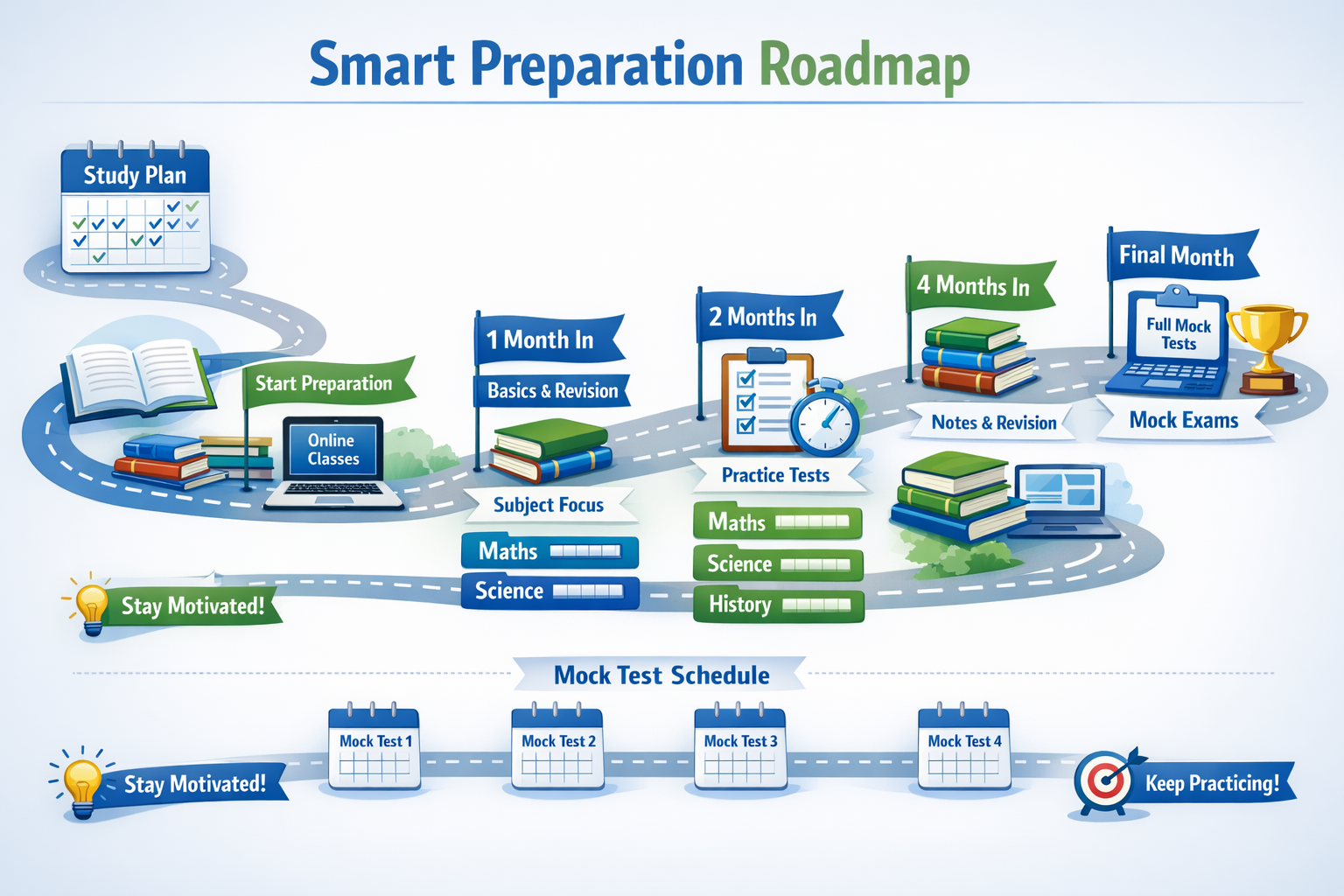
Foundation Phase (6-8 months before exam):
- Build strong reading habits across diverse topics
- Establish daily current affairs routine
- Develop basic logical and mathematical skills
- Begin legal reasoning concept understanding
Development Phase (3-5 months before exam):
- Intensive passage-based practice across all sections
- Mock test integration with performance analysis
- Weakness identification and targeted improvement
- Advanced legal reasoning scenario practice
Mastery Phase (1-2 months before exam):
- Full-length mock tests under timed conditions
- Revision of key concepts and current affairs
- Strategy refinement based on performance patterns
- Confidence building through consistent practice
For detailed timeline planning, explore our comprehensive 6-month preparation roadmap that provides week-by-week guidance.
Technology Integration and Modern Prep Tools
Accessible education for serious aspirants now includes leveraging technology for efficient preparation. Digital tools can significantly enhance traditional study methods when used strategically.
Effective technology integration:
- Online mock platforms for realistic exam simulation
- Current affairs apps for daily news consumption
- Legal databases for case law and judgment access
- Time management tools for practice session optimization
- Performance analytics for weakness identification
We’ve helped thousands crack CLAT by combining traditional coaching excellence with modern technological tools. The key is using technology to enhance rather than replace fundamental preparation strategies.
Mock Test Strategy and Performance Analysis
Regular mock testing forms the cornerstone of effective CLAT preparation, but the approach must be strategic rather than mechanical. Results speak louder than promises, and consistent mock test analysis drives improvement.
Optimal mock test strategy:
- Weekly full-length tests during development phase
- Section-wise tests for targeted skill building
- Timed practice sessions for speed development
- Error analysis for pattern identification
- Strategy adjustment based on performance data
Performance analysis framework:
- Accuracy patterns across different sections
- Time allocation efficiency and optimization
- Question selection strategy effectiveness
- Strength and weakness identification
- Improvement tracking over time
For advanced mock test strategies, review our proven practice techniques that have helped students achieve top rankings.
Balancing Preparation with Academic Commitments
Many CLAT aspirants face the challenge of balancing exam preparation with board exams and regular academic responsibilities. No cookie-cutter approach here – successful students develop personalized strategies that accommodate their unique circumstances.
Effective balance strategies:
- Integrated study plans connecting board syllabus with CLAT topics
- Time blocking for dedicated CLAT preparation
- Weekend intensive sessions for comprehensive practice
- Holiday acceleration during school breaks
- Stress management techniques for sustained performance
Let’s build your law career together by creating realistic preparation schedules that respect academic obligations while ensuring CLAT readiness. The key is consistency rather than intensity.
For students managing multiple commitments, our guide on balancing board exams with CLAT preparation provides practical scheduling solutions.
Advanced Preparation Techniques for CLAT 2027
Developing Legal Aptitude and Mindset
Success in CLAT 2027 requires more than subject knowledge—it demands developing a legal mindset that approaches problems analytically and systematically. This transformation distinguishes successful candidates from those who struggle despite extensive preparation.
Legal mindset development strategies:
- Case study analysis from multiple legal perspectives
- Ethical reasoning practice with moral dilemmas
- Constitutional thinking about rights and responsibilities
- Practical application of legal principles to everyday situations
- Critical evaluation of legal arguments and precedents
Daily practice routines should include reading legal news with analytical questions: Why did the court decide this way? What are the broader implications? How might this affect future cases? This approach builds the analytical foundation essential for legal reasoning success.
For comprehensive legal mindset development, explore our specialized legal aptitude techniques designed specifically for CLAT aspirants.
Advanced Reading and Comprehension Strategies
The 450-word passage format across multiple sections demands sophisticated reading strategies that go beyond basic comprehension[5]. Developing speed with accuracy requires systematic practice and technique refinement.
Advanced reading techniques:
- Structural analysis identifying main arguments and supporting evidence
- Predictive reading anticipating question types based on passage content
- Active annotation for key points and logical connections
- Perspective analysis understanding author bias and viewpoint
- Integration skills connecting passage content with broader knowledge
Speed development without comprehension loss:
- Graduated practice starting with untimed thorough reading
- Time pressure introduction gradually reducing reading time
- Question prediction before reading actual questions
- Elimination techniques for efficient answer selection
- Review and refinement of reading strategies based on performance
Our specialized guide for reading CLAT passages provides detailed techniques for mastering the 450-word format efficiently.
Weakness Identification and Targeted Improvement
Continuous feedback drives improvement, but many students struggle with effective self-assessment and targeted remediation. Systematic weakness identification and focused improvement strategies separate successful candidates from those who plateau.
Weakness identification methods:
- Detailed mock test analysis tracking error patterns
- Section-wise performance monitoring over time
- Question-type difficulty assessment identifying specific challenges
- Time allocation analysis revealing efficiency problems
- Stress performance evaluation under exam conditions
Targeted improvement strategies:
- Micro-skill development focusing on specific question types
- Intensive practice sessions for identified weak areas
- Alternative approach exploration when current methods fail
- Mentor guidance for personalized improvement plans
- Progress tracking with measurable improvement goals
For comprehensive weakness analysis and improvement strategies, review our emergency improvement techniques designed for rapid skill development.
Staying Updated with CLAT 2027 Trends
Monitoring Exam Evolution and Pattern Changes
CLAT continues evolving to better assess legal aptitude and readiness for law school success. Staying informed about these changes ensures preparation remains relevant and effective throughout the preparation journey.
Information sources for updates:
- Official consortium announcements for authoritative information
- Expert analysis from experienced coaching professionals
- Previous year trend analysis for pattern prediction
- Law school admission insights for broader context understanding
- Student feedback from recent exam experiences
Adaptation strategies for evolving patterns:
- Flexible preparation plans accommodating potential changes
- Diverse practice materials covering various question formats
- Skill-based focus rather than format-specific preparation
- Regular strategy review and adjustment based on new information
- Expert consultation for guidance on significant changes
Building Long-term Legal Career Awareness
CLAT preparation extends beyond exam success to building awareness of legal career opportunities and requirements. Understanding the profession’s evolution helps maintain motivation and informed decision-making about specialization areas.
Career awareness development:
- Legal profession trends and emerging practice areas
- Technology impact on legal practice and education
- Specialization opportunities in various legal fields
- Professional skill requirements beyond academic knowledge
- Industry networking and mentorship opportunities
Integration with preparation:
- Current affairs focus on legal profession developments
- Case study selection representing diverse legal practice areas
- Skill development aligned with professional requirements
- Long-term goal setting beyond CLAT success
- Professional mindset cultivation during preparation phase
For insights into legal profession evolution, explore our analysis of how the legal profession is changing and its implications for aspiring lawyers.
Conclusion
The CLAT 2027 Syllabus Decoded: Key Changes, Trends, and Smart Prep Strategies reveals an exam that continues emphasizing analytical thinking, practical application, and legal aptitude over rote memorization. Success requires understanding both the stable foundation and evolving trends that shape question patterns and difficulty levels.
Key strategic priorities for CLAT 2027 preparation include developing strong analytical legal reasoning skills, maintaining comprehensive current affairs knowledge with legal focus, and building efficient reading comprehension abilities across diverse passage types. The quantitative techniques section offers consistent scoring opportunities, while logical reasoning increasingly mirrors legal thinking patterns.
Your preparation strategy must balance comprehensive coverage with targeted practice on emerging trends like case-based legal reasoning, AI ethics, and contemporary legal issues. Regular mock testing with detailed performance analysis drives continuous improvement and strategy refinement.
Next steps for success:
- Assess current preparation level across all five sections
- Create personalized study plan based on strengths and weaknesses
- Establish daily current affairs routine with legal news focus
- Begin regular mock testing for performance tracking
- Seek expert guidance for strategy optimization and doubt resolution
Ready to transform your CLAT preparation with expert guidance and proven strategies? Let’s build your law career together with personalized coaching that adapts to your unique needs and schedule. Explore our comprehensive CLAT preparation courses designed specifically for serious aspirants who demand results without compromising on quality or affordability.
Remember, CLAT success isn’t about perfect preparation—it’s about smart preparation that maximizes your potential while building the analytical foundation essential for law school success. Start implementing these strategies today, and watch your confidence and performance grow consistently toward your NLU admission goals.
References
[1] Clat 2026 Syllabus Changes And New Pattern Explained – https://bharatsofttech.com/blog/clat-2026-syllabus-changes-and-new-pattern-explained.php
[2] Clat Syllabus – https://www.imsindia.com/blog/clat/clat-syllabus/
[3] Understanding Clat Key Changes Syllabus Breakdown And Preparation Tips For Aspirants – https://lawprep.in/understanding-clat-key-changes-syllabus-breakdown-and-preparation-tips-for-aspirants
[4] Exam Pattern – https://collegedunia.com/exams/clat/exam-pattern
[5] Ug Syllabus – https://consortiumofnlus.ac.in/clat-2026/ug-syllabus.html
[6] Clat 2026 Exam Pattern – https://studyriserr.com/news/clat-2026-exam-pattern
[7] Clat 2026 High Scoring Topics You Must Prepare – https://law.careers360.com/articles/clat-2026-high-scoring-topics-you-must-prepare
[8] Clat 2026 Exam Date Eligibility Syllabus Registration Pattern Tips Cutoff – https://sageuniversity.edu.in/blogs/clat-2026-exam-date-eligibility-syllabus-registration-pattern-tips-cutoff
[9] Clat 2026 – https://consortiumofnlus.ac.in/clat-2026/

