Highest Paid Lawyers in India: Inside the Legal Profession That’s Creating Millionaires

Picture this: a single court appearance earning more than what most people make in a year. That’s the reality for India’s top legal minds. The legal profession in India has transformed from a respectable career choice into one of the most lucrative paths you can take. We’re talking about lawyers who command fees that would make your head spin, yet their expertise is worth every rupee.
Here’s the thing. When you’re preparing for CLAT and dreaming about your future in law, you probably wonder what the ceiling looks like. What can you actually achieve in this profession? The answer might surprise you. India’s highest paid lawyers aren’t just wealthy. They’re influential, powerful, and they’ve shaped the very fabric of our democracy through landmark cases that changed millions of lives.
Let’s be honest. The legal profession in India isn’t just about courtroom drama and fancy arguments anymore. It’s a sophisticated ecosystem where expertise, reputation, and strategic thinking translate into serious financial success. And if you’re serious about cracking CLAT and building a career in law, understanding this landscape isn’t just interesting. It’s essential.
Key Takeaways
- India’s top lawyers earn between Rs 15-25 lakhs per court appearance, with annual incomes reaching several crores
- Supreme Court advocates with 20+ years of experience dominate the highest earning bracket in the legal profession
- Specialization in constitutional law, corporate litigation, and international arbitration commands premium fees
- Building a successful legal career requires strategic planning, continuous learning, and strong professional networks
- The legal profession in 2025 offers unprecedented opportunities through technology integration and cross-border practice
Who Are the Highest Paid Lawyers in India?
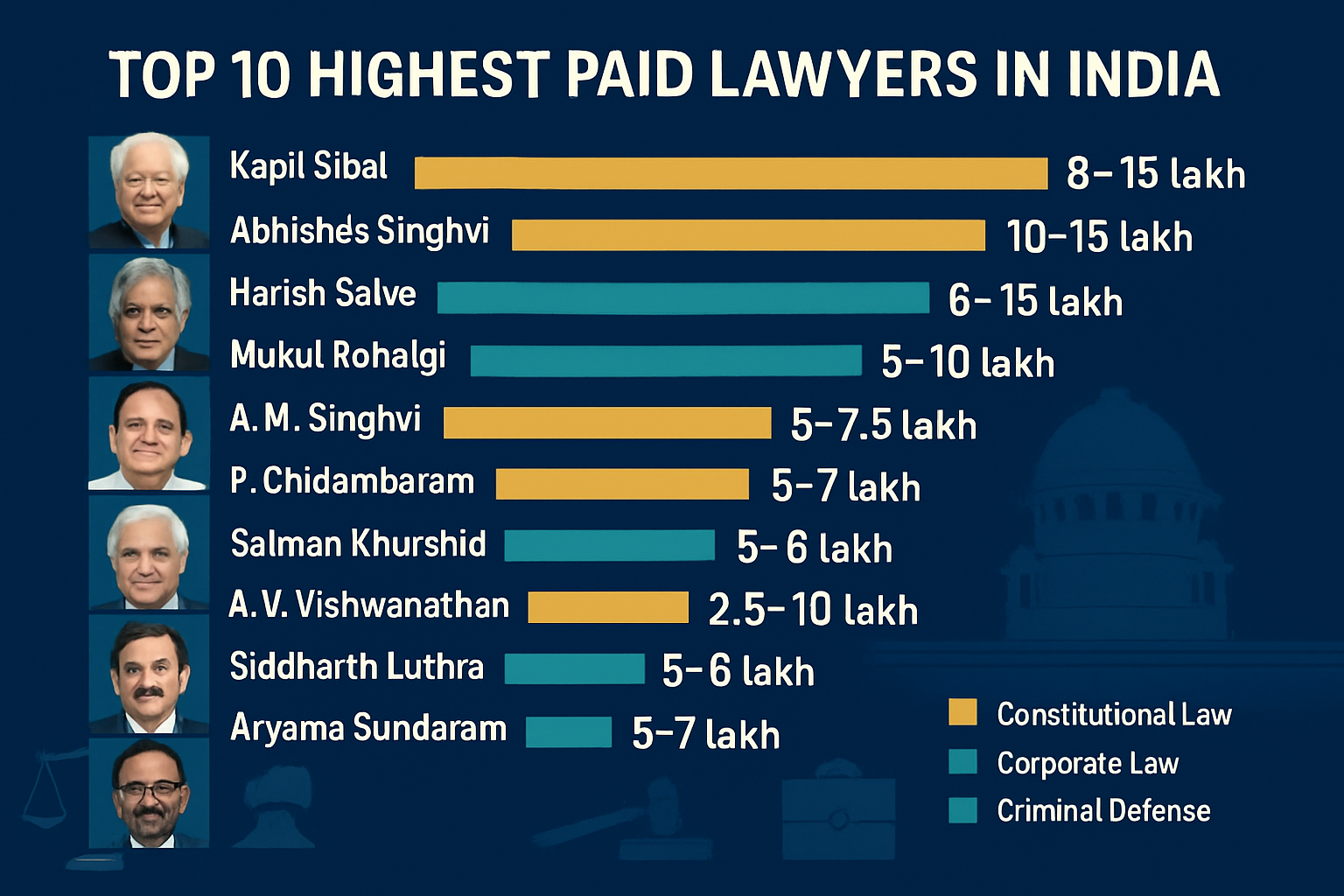
The legal profession in India has produced some extraordinary talent. These aren’t just lawyers. They’re legal legends who’ve argued cases that defined constitutional principles, protected fundamental rights, and shaped corporate India.
Harish Salve: The International Legal Icon
When you talk about the highest paid lawyers in India, Harish Salve’s name comes up first. This man charges approximately Rs 15-25 lakhs per court appearance. Let that sink in. His annual income runs into several crores, making him not just India’s most expensive lawyer but also one of the most respected globally.
Salve’s journey is fascinating. He started his career in tax law, became the Solicitor General of India, and then transitioned into private practice where he truly made his mark. His expertise spans constitutional law, international arbitration, and corporate litigation. Remember the Kulbhushan Jadhav case at the International Court of Justice? That was Salve representing India on the world stage.
What makes Salve stand out isn’t just his fees. It’s his strategic thinking. He approaches cases like chess matches, thinking several moves ahead. His arguments are crisp, well-researched, and devastatingly effective. For aspiring lawyers preparing through quality CLAT coaching, Salve represents the pinnacle of what analytical thinking and legal expertise can achieve.
Notable achievements:
- Represented India at the International Court of Justice
- Former Solicitor General of India
- Specializes in constitutional and international law
- Commands the highest fees in Indian legal circles
- Practices in both Indian and international courts
Kapil Sibal: The Multifaceted Legal Giant
Kapil Sibal brings a unique combination to the legal profession. He’s a senior Supreme Court advocate, former Union Minister, and one of the sharpest legal minds in the country. His fees range from Rs 10-16 lakhs per appearance, and his practice covers everything from constitutional matters to high-stakes corporate disputes.
Sibal’s strength lies in his versatility. He’s equally comfortable arguing complex constitutional questions as he is handling massive corporate litigation. His political experience gives him insights into legislative intent that most lawyers simply don’t have. This makes him particularly effective in constitutional cases where understanding the broader policy context matters.
The 2G spectrum case, coal scam cases, Ayodhya dispute. Sibal has been involved in virtually every major legal battle that’s shaped modern India. His courtroom presence is commanding, his arguments are layered with precedent and principle, and his success rate speaks for itself.
Mukul Rohatgi: The Strategic Powerhouse
Mukul Rohatgi, another former Attorney General of India, charges between Rs 10-15 lakhs per appearance. What sets Rohatgi apart is his strategic approach to litigation. He doesn’t just argue cases. He builds comprehensive legal strategies that address every possible angle.
Rohatgi’s practice focuses heavily on constitutional law, arbitration, and corporate matters. He’s known for taking on complex cases that other lawyers might shy away from. His representation of various state governments and major corporations has established him as someone who can handle pressure-cooker situations with remarkable calm.
His work on cases involving federalism, economic policy, and fundamental rights has contributed significantly to Indian jurisprudence. For students at top law coaching institutes, studying Rohatgi’s arguments provides masterclasses in legal reasoning.
Abhishek Manu Singhvi: The Constitutional Expert
Dr. Abhishek Manu Singhvi combines academic brilliance with practical legal expertise. With fees ranging from Rs 8-12 lakhs per appearance, he’s among the top earners in the legal profession. His PhD from Harvard and his deep understanding of constitutional law make him a go-to lawyer for complex constitutional matters.
Singhvi’s practice is built on meticulous preparation. He’s known for citing obscure precedents that completely change the direction of a case. His arguments are academic in their depth but practical in their application. He’s represented major political parties, corporate houses, and individuals in cases that have national significance.
What’s particularly interesting about Singhvi is his ability to simplify complex legal principles. He can take a convoluted constitutional question and break it down into clear, logical arguments that even non-lawyers can follow. This skill is invaluable in the Supreme Court where judges appreciate clarity.
Gopal Subramanium: The Principled Advocate
Gopal Subramanium stands out for his principled approach to law. As a former Solicitor General who declined a Supreme Court judgeship on principle, he commands immense respect. His fees are in the Rs 8-10 lakhs per appearance range, and his practice focuses on constitutional law, human rights, and public interest litigation.
Subramanium has been involved in some of the most sensitive cases in recent Indian history. The 2G scam investigation, the coal block allocation case, and numerous human rights matters have all seen his involvement. He’s known for taking pro bono cases when he believes in the cause, which has earned him tremendous respect within the legal community.
His courtroom style is methodical and thorough. He builds arguments brick by brick, ensuring that every point is supported by solid legal foundation. For aspiring lawyers learning through comprehensive CLAT preparation, Subramanium’s approach demonstrates how principled practice and financial success aren’t mutually exclusive.
Understanding Lawyer Fees and Earnings in the Legal Profession
The fee structure in the legal profession can seem mysterious from the outside. How do lawyers actually charge? What determines their rates? And how do they build practices that generate crores annually?
The Anatomy of Legal Fees
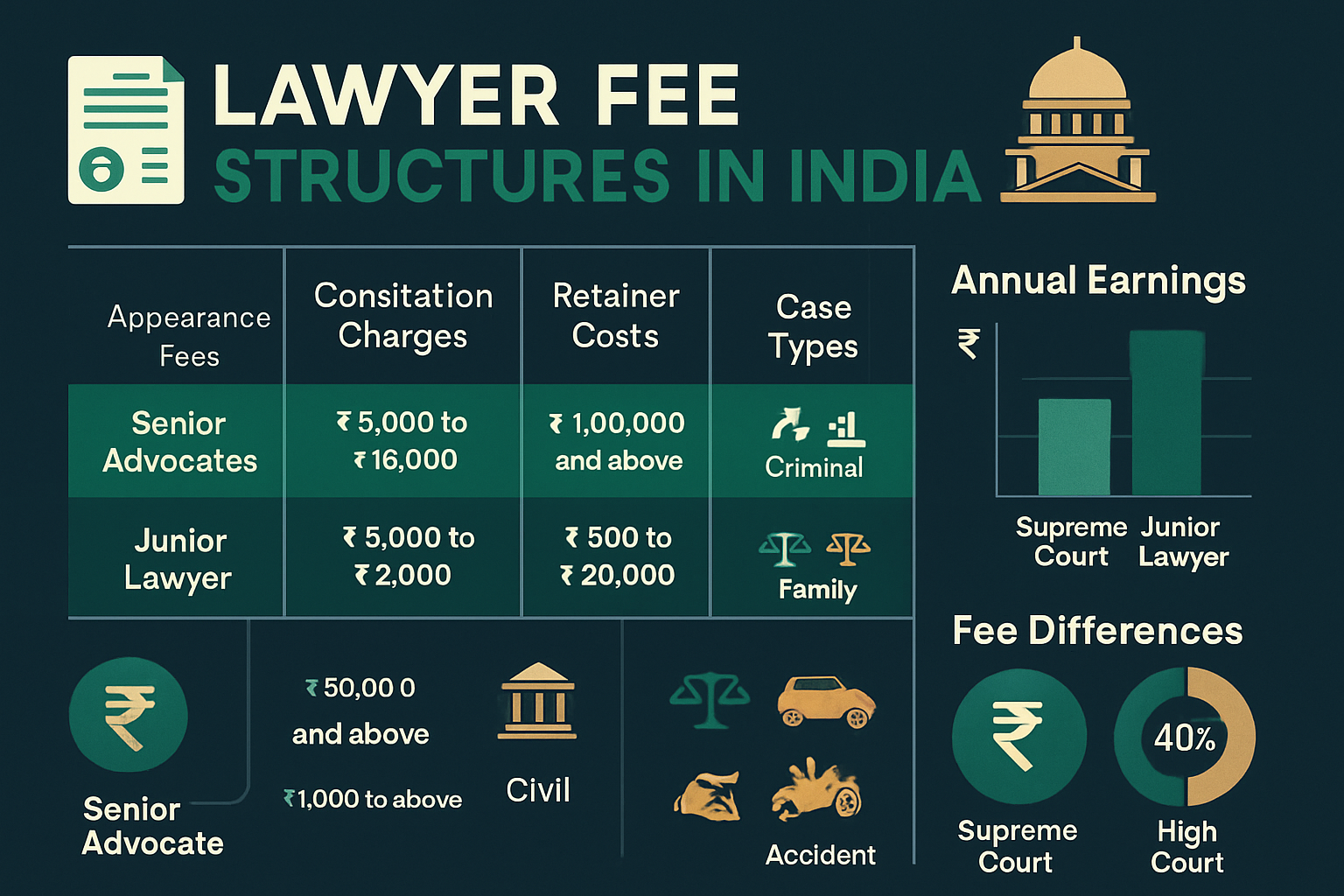
Legal fees in India operate on several models. Understanding these is crucial if you’re planning a career in law.
Appearance fees are what lawyers charge for appearing in court. For top Supreme Court advocates, this can range from Rs 5 lakhs to Rs 25 lakhs per appearance. The fee depends on the lawyer’s reputation, the complexity of the matter, and the stakes involved. A constitutional case affecting millions of people commands higher fees than a routine civil matter.
Consultation fees are charged for legal advice without court appearance. Senior advocates might charge Rs 50,000 to Rs 5 lakhs for a consultation session. These sessions involve analyzing legal issues, suggesting strategies, and providing opinions on complex matters.
Retainer fees are monthly or annual payments made by clients who need ongoing legal support. Major corporations often retain top lawyers, paying them crores annually to ensure their availability. This provides lawyers with stable income while giving clients priority access to top legal talent.
Briefing fees are one-time payments made when a case is first briefed to a senior advocate. These can be substantial, sometimes matching or exceeding the appearance fee, especially for high-stakes matters.
Factors That Determine Legal Fees
Several factors influence what lawyers can charge in the legal profession:
Experience and reputation matter most. A lawyer with 25 years of Supreme Court practice and a track record of winning landmark cases commands premium fees. Their expertise has been proven repeatedly, reducing client risk.
Specialization significantly impacts earning potential. Constitutional law experts, international arbitration specialists, and corporate litigation lawyers typically earn more than general practitioners. The complexity and stakes in their cases justify higher fees.
Court level affects fees dramatically. Supreme Court advocates earn significantly more than High Court lawyers, who in turn earn more than district court practitioners. The complexity of legal issues increases at higher judicial levels.
Case complexity and stakes directly influence fees. A case involving thousands of crores in corporate disputes or fundamental constitutional questions commands higher fees than routine matters. The preparation required and the consequences of losing justify premium pricing.
Client profile plays a role too. Major corporations, government entities, and high-net-worth individuals can afford and are willing to pay premium fees for top legal talent. They understand that saving money on legal fees often proves penny-wise and pound-foolish.
Building a High-Earning Legal Practice
The journey to becoming a highly paid lawyer isn’t accidental. It requires strategic planning and consistent execution.
Start with strong fundamentals. Success in the legal profession begins with cracking competitive exams like CLAT and getting into top National Law Universities. The education, peer network, and opportunities at premier institutions create a foundation for future success. Students preparing through expert CLAT coaching understand this advantage.
Choose your specialization wisely. Early in your career, identify areas of law that interest you and have strong demand. Constitutional law, corporate litigation, tax law, intellectual property, and international arbitration are particularly lucrative. Develop deep expertise in your chosen area.
Build your reputation systematically. Every case you handle is an opportunity to demonstrate your skills. Win cases, write well-researched articles, speak at legal conferences, and contribute to legal journals. Your reputation is your most valuable asset in the legal profession.
Network strategically. Relationships matter enormously in law. Senior advocates, judges, corporate counsels, and fellow lawyers in your network can refer cases to you. Attend bar association events, legal seminars, and professional gatherings. Build genuine relationships, not transactional connections.
Invest in continuous learning. Law evolves constantly. New judgments, legislative changes, and emerging legal issues require constant updating. Top lawyers spend significant time reading, researching, and analyzing legal developments. This investment in knowledge pays dividends throughout your career.
Career Paths in the Legal Profession: From Junior to Supreme Court Advocate
Understanding the career progression in the legal profession helps you plan your journey strategically. The path from law school to becoming one of India’s highest paid lawyers is long but rewarding.
The Junior Years: Building Your Foundation
Fresh out of law school, you’ll likely start as a junior advocate. This phase typically lasts 3-5 years and is crucial for developing practical skills. Your earnings during this period might be modest, ranging from Rs 20,000 to Rs 50,000 monthly, but the learning is invaluable.
Junior advocates assist senior lawyers with research, drafting, and case preparation. You’ll spend hours in law libraries, poring over precedents, and learning how legal arguments are constructed. You’ll attend court proceedings, observe how senior advocates argue, and gradually understand courtroom dynamics.
This apprenticeship model, though challenging financially, provides education no law school can offer. You learn client management, court procedures, legal drafting, and strategic thinking. You also begin building relationships with court staff, fellow lawyers, and potentially clients.
Many successful lawyers look back at their junior years as the most formative period of their careers. The work ethic, attention to detail, and legal thinking developed during this phase becomes the foundation for everything that follows.
The Mid-Career Phase: Establishing Your Practice
After 5-10 years, you transition from junior to independent practitioner. This is when your career trajectory really begins to take shape. Your earnings can range from Rs 1 lakh to Rs 5 lakhs monthly, depending on your specialization and practice development.
During this phase, you start handling cases independently. You develop your client base, refine your specialization, and build your reputation. Success requires balancing quality legal work with business development. You need to deliver excellent results for existing clients while constantly expanding your practice.
This is also when you decide whether to focus on litigation or move into corporate practice. Litigators continue appearing in courts, while corporate lawyers might join law firms or become in-house counsels. Both paths can be lucrative, but they require different skill sets and offer different lifestyles.
Strategic choices during this phase significantly impact your long-term success. Choosing the right cases, building the right relationships, and developing expertise in high-demand areas positions you for the next level.
The Senior Advocate Designation: The Game Changer
Becoming a senior advocate is a major milestone in the legal profession. This designation, conferred by High Courts and the Supreme Court, recognizes exceptional legal expertise and ethical practice. It typically comes after 15-20 years of distinguished practice.
Senior advocates don’t directly interact with clients or handle routine case management. Instead, they focus on arguing cases in court. Junior advocates and law firms brief them, handle client interactions, and manage case logistics. This allows senior advocates to focus on what they do best: legal argumentation.
The financial impact of this designation is substantial. Fees increase significantly, often doubling or tripling overnight. A lawyer charging Rs 50,000 per appearance might start charging Rs 2-3 lakhs after becoming a senior advocate. The designation signals exceptional expertise, justifying premium fees.
However, the designation comes with responsibilities. Senior advocates are expected to uphold the highest ethical standards, contribute to legal education, and take pro bono cases. The honor isn’t just about earning potential. It’s about contributing to the legal profession and justice system.
Reaching the Peak: Supreme Court Practice
The ultimate goal for many litigators is establishing a successful Supreme Court practice. This is where the highest paid lawyers in India operate. It typically takes 20-25 years to reach this level, but the rewards are substantial.
Supreme Court advocates handle the most complex legal questions in the country. Constitutional challenges, high-stakes corporate disputes, and matters of national importance fill their dockets. The intellectual challenge is immense, but so is the satisfaction of shaping legal principles that affect millions.
Financially, this is the peak. Top Supreme Court advocates earn several crores annually. Their appearance fees alone can generate substantial income, and retainers from major clients provide stable revenue streams. Some establish chambers with multiple junior advocates, creating institutional practices that outlast individual careers.
But reaching this level requires more than just legal skills. It demands exceptional work ethic, strategic thinking, continuous learning, and the ability to handle pressure. Cases at this level involve enormous stakes. Clients expect perfection, and the margin for error is minimal.
For students currently preparing for CLAT through structured coaching programs, understanding this career trajectory helps set realistic expectations and long-term goals.
Specializations That Command Premium Fees in the Legal Profession
Not all legal practice areas are created equal when it comes to earning potential. Some specializations consistently command higher fees due to complexity, stakes, and demand.
Constitutional Law: The Intellectual Peak
Constitutional law sits at the apex of legal practice in India. Cases involve fundamental rights, federalism, separation of powers, and other foundational principles. The complexity is immense, the stakes are often national in scope, and the intellectual challenge is unmatched.
Top constitutional lawyers command the highest fees in the legal profession. A single case might involve months of research, multiple court appearances, and arguments that shape legal principles for decades. Clients include governments, major corporations, and individuals whose fundamental rights are at stake.
What makes constitutional law particularly lucrative is the limited pool of genuine experts. Mastering constitutional law requires deep knowledge of constitutional history, comparative constitutional law, political philosophy, and practical litigation skills. Few lawyers develop this combination, creating strong demand for those who do.
Landmark cases like privacy rights, Aadhaar, Article 370, and electoral bonds have all involved constitutional law experts. These cases generate enormous public interest, enhance lawyer reputation, and lead to more high-profile briefs. The virtuous cycle of expertise, reputation, and opportunity drives premium earnings.
Corporate and Commercial Litigation: Where Money Meets Law
Corporate litigation involves disputes between businesses or between businesses and regulatory authorities. The amounts at stake often run into thousands of crores, making legal fees a small percentage of potential outcomes. This justifies premium pricing for top legal talent.
Mergers and acquisitions disputes, shareholder conflicts, regulatory challenges, and contract breaches form the bulk of corporate litigation. These cases require understanding not just law but also business, finance, and industry dynamics. Lawyers who can think like businesspeople while arguing like lawyers are particularly valuable.
International arbitration, a subset of corporate practice, is especially lucrative. Cases often involve cross-border disputes, multiple jurisdictions, and complex commercial arrangements. Arbitrations can run for years, generating substantial fees for lawyers involved. Top arbitration lawyers in India earn comparable to their international counterparts.
The corporate sector values legal expertise highly and pays accordingly. Companies understand that good legal advice can save or earn them crores. They’re willing to pay Rs 10-15 lakhs for a court appearance if it protects a Rs 1000 crore transaction. This economic reality drives high legal fees in corporate practice.
Tax Law: The Specialized Money Maker
Tax law might not be glamorous, but it’s incredibly lucrative. Businesses and high-net-worth individuals face complex tax issues that can involve enormous sums. Expert tax lawyers who can navigate Income Tax Act, GST, international taxation, and transfer pricing command premium fees.
Tax litigation often involves interpretation of complex statutory provisions, application of accounting principles, and understanding of business transactions. The technical nature creates barriers to entry. Not every lawyer can master tax law’s intricacies, limiting competition and supporting higher fees.
What makes tax law particularly attractive is the recurring nature of work. Tax issues arise continuously, creating steady demand for expert advice. A good tax lawyer can build a practice with reliable retainer clients who need ongoing support, providing income stability while maintaining high hourly rates.
Major tax cases can involve thousands of crores in disputed taxes. A lawyer who saves a client Rs 500 crores in tax liability can easily justify fees of several crores. The value delivered far exceeds the fees charged, making it a worthwhile investment for clients.
Intellectual Property: The Future of Legal Practice
Intellectual property law has emerged as one of the fastest-growing and most lucrative specializations. As India’s economy becomes more knowledge-based, patents, trademarks, copyrights, and trade secrets grow in importance. Companies invest billions in innovation and brand building, making IP protection crucial.
IP litigation can involve pharmaceutical patents worth thousands of crores, trademark disputes affecting global brands, and copyright cases in the entertainment industry. The technical complexity requires lawyers to understand not just law but also science, technology, and creative industries.
What’s particularly interesting about IP law is its international dimension. Many cases involve cross-border issues, international treaties, and global enforcement strategies. Lawyers who can navigate multiple jurisdictions and coordinate international legal teams are especially valuable and well-compensated.
The technology boom has supercharged IP practice. Software patents, data protection, artificial intelligence, and digital content create new legal questions daily. Lawyers who develop expertise in these emerging areas position themselves for significant earning potential as these issues become mainstream.
Criminal Defense: High Stakes, High Fees
While not as consistently lucrative as corporate practice, criminal defense for high-profile cases can generate substantial fees. Cases involving prominent individuals, major financial crimes, or politically sensitive matters attract significant public attention and command premium fees.
Top criminal lawyers combine legal expertise with psychological insight, investigative skills, and courtroom presence. They need to understand criminal procedure, evidence law, and trial advocacy while managing client stress and public scrutiny. This combination of skills is rare and valuable.
White-collar crime defense has become particularly lucrative. Cases involving corporate fraud, money laundering, and economic offenses often involve complex financial transactions and regulatory frameworks. Lawyers who can navigate both criminal law and corporate finance are in high demand.
The emotional stakes in criminal cases justify premium fees. When someone’s liberty is at stake, they’re willing to pay for the best defense possible. Top criminal lawyers leverage this reality, charging fees that reflect the gravity of consequences their clients face.
The Role of Technology and Innovation in Modern Legal Practice

The legal profession in 2025 looks dramatically different from even a decade ago. Technology has transformed how lawyers work, compete, and serve clients. Understanding these changes is crucial for aspiring lawyers planning long-term careers.
Legal Research Revolution
Gone are the days of spending weeks in dusty law libraries. Modern legal research platforms like Manupatra, SCC Online, and LexisNexis have revolutionized how lawyers find precedents, analyze judgments, and build arguments. AI-powered research tools can now scan thousands of cases in seconds, identifying relevant precedents that might take humans days to find.
This technology hasn’t reduced the need for skilled lawyers. Instead, it’s raised the bar. Clients expect faster turnarounds, more comprehensive research, and better-supported arguments. Lawyers who master these tools gain competitive advantages, delivering higher quality work in less time.
For students preparing through modern CLAT coaching platforms, familiarity with legal research technology should begin early. The lawyers who thrive in coming decades will be those who combine traditional legal skills with technological proficiency.
Virtual Courts and Remote Practice
The COVID-19 pandemic accelerated adoption of virtual courts. What began as emergency measures have become permanent features of legal practice. Supreme Court hearings via video conference, electronic filing of documents, and digital case management are now standard.
This shift has democratized access to top legal talent. A lawyer in Delhi can now appear in a Chennai High Court matter without traveling. This expands market opportunities while reducing overhead costs. It also allows lawyers to handle more cases, potentially increasing earnings.
However, virtual practice requires new skills. Presenting arguments effectively on screen differs from in-person courtroom advocacy. Managing technology, ensuring connectivity, and maintaining professional presence in virtual settings are new competencies lawyers must develop.
Legal Analytics and Data-Driven Practice
Advanced analytics tools now allow lawyers to analyze judge behavior, predict case outcomes, and optimize legal strategies. By examining thousands of past judgments, these tools identify patterns in how specific judges rule on particular issues.
This data-driven approach to law is controversial but increasingly common. Lawyers who can combine traditional legal reasoning with analytical insights gain strategic advantages. They can tailor arguments to specific judges, anticipate counterarguments, and make more informed strategic decisions.
For high-stakes litigation, clients increasingly expect this level of sophistication. They want lawyers who use every available tool to maximize success probability. This expectation drives adoption of legal analytics, particularly in corporate practice.
Cross-Border Practice and Global Opportunities
Technology has enabled Indian lawyers to participate in international legal markets more easily than ever. Video conferences, digital collaboration tools, and online research platforms allow seamless work with international clients and foreign law firms.
Indian lawyers with expertise in international arbitration, cross-border transactions, and comparative law can now compete globally. The earning potential in international practice often exceeds domestic practice, with fees comparable to developed country rates.
This globalization of legal practice creates opportunities but also competition. Indian lawyers now compete not just with domestic colleagues but with lawyers worldwide. Success requires not just legal expertise but also cultural awareness, language skills, and understanding of international business practices.
Artificial Intelligence and the Future of Law
AI is beginning to impact legal practice in significant ways. Contract review, due diligence, and routine legal research can now be partially automated. Some predict AI will eventually replace lawyers for routine work.
However, the highest paid lawyers in India aren’t worried. AI handles routine tasks, but complex legal reasoning, strategic thinking, and courtroom advocacy remain distinctly human skills. If anything, AI frees top lawyers from routine work, allowing them to focus on high-value activities that justify premium fees.
The lawyers who will thrive are those who view AI as a tool, not a threat. They’ll use AI to handle routine tasks efficiently while focusing their expertise on complex problems that require human judgment, creativity, and strategic thinking.
Building Your Path to Success in the Legal Profession
Understanding what top lawyers earn and how they got there is fascinating. But how do you actually build a career that reaches those heights? Let’s break down the practical steps.
Start Strong: Cracking CLAT and Choosing the Right Law School
Your journey begins with CLAT. Getting into a top National Law University isn’t just about prestige. It’s about access to opportunities, quality education, and peer networks that last a lifetime. The difference between graduating from NLSIU Bangalore or NALSAR Hyderabad versus a tier-3 law school is substantial.
Top NLUs offer superior faculty, better infrastructure, more rigorous academics, and stronger placement opportunities. More importantly, they provide peer groups of ambitious, talented students who push you to excel. Many of India’s top lawyers are NLU graduates, and the alumni networks from these institutions are invaluable.
This is why serious CLAT preparation matters. Students working with experienced CLAT mentors understand that the effort invested in exam preparation pays dividends throughout their careers. A few months of focused preparation can shape decades of professional success.
Beyond just cracking CLAT, choose your law school strategically. Consider faculty strength in your areas of interest, placement records, moot court opportunities, and location. Each NLU has different strengths. Match them with your career goals.
Excel Academically and Beyond
Once in law school, academic performance matters. Good grades demonstrate intellectual capability, work ethic, and mastery of legal principles. Top law firms and senior advocates often recruit from the top of the class.
But grades aren’t everything. Participate actively in moot courts, legal aid clinics, and research projects. These activities develop practical skills that academics alone can’t teach. Moot courts, in particular, are invaluable for developing advocacy skills and building confidence.
Write for legal journals, participate in debates, and engage with current legal issues. Building a track record of intellectual engagement demonstrates passion for law beyond just career ambition. This distinguishes you when competing for opportunities later.
Internships during law school are crucial. Work with top law firms, senior advocates, and judges if possible. These experiences provide practical exposure, help you understand different career paths, and build professional networks. Many successful lawyers trace their career breaks to connections made during law school internships.
Choose Your First Job Wisely
Your first job after law school significantly impacts your career trajectory. The choice typically falls between joining a law firm, working with a senior advocate, or starting independent practice.
Top-tier law firms offer structured training, exposure to complex matters, and good initial salaries. You’ll work on major corporate transactions, learn from experienced lawyers, and develop professional work habits. However, law firm life can be demanding, with long hours and intense pressure.
Working with a senior advocate offers different benefits. You’ll get closer exposure to courtroom practice, learn litigation skills directly, and understand how successful lawyers build their practices. The learning curve is steep, and earnings might be lower initially, but the practical education is invaluable.
Some graduates start independent practice immediately. This requires entrepreneurial spirit, financial cushion, and strong networking skills. It’s risky but offers maximum independence and unlimited upside if you succeed.
Consider your long-term goals when making this choice. If you want to become a litigator, working with a senior advocate makes sense. If corporate law interests you, a law firm provides better training. There’s no single right answer, but the choice should align with your career vision.
Develop Deep Expertise
As your career progresses, specialization becomes crucial. The days of general practice are largely over. Clients want specialists who deeply understand specific areas of law.
Choose your specialization based on interest, market demand, and natural aptitude. If you love constitutional questions and enjoy academic analysis, constitutional law might suit you. If you prefer business contexts and commercial negotiations, corporate law could be better.
Once you choose, commit to becoming an expert. Read every major judgment in your area, write articles, speak at conferences, and engage with leading practitioners. Expertise isn’t claimed, it’s earned through years of focused work.
Stay updated continuously. Law evolves constantly through new judgments, legislation, and regulatory changes. Top lawyers spend significant time just staying current. This investment in continuous learning is what maintains expertise and justifies premium fees.
Build Your Professional Brand
In the legal profession, reputation is everything. Your brand is built through consistent quality work, ethical practice, and strategic visibility.
Every case you handle is a branding opportunity. Do excellent work, exceed client expectations, and build a reputation for reliability. Word of mouth remains the most powerful marketing in legal practice. Satisfied clients and impressed opponents become your best marketers.
Write articles for legal publications, speak at seminars, and engage on professional platforms. Visibility among peers, potential clients, and the legal community helps build your brand. However, ensure substance backs your visibility. Empty self-promotion backfires in the legal profession.
Maintain impeccable ethics. The legal profession is small, and reputation damage spreads quickly. Lawyers known for cutting corners, misleading courts, or betraying client confidence find their careers limited regardless of their legal skills.
Network Strategically and Authentically
Success in law is as much about relationships as expertise. Build genuine professional relationships throughout your career.
Engage actively with bar associations, attend legal conferences, and participate in professional committees. These forums provide opportunities to meet peers, senior lawyers, and potential clients. However, approach networking authentically. Build real relationships, not transactional connections.
Maintain relationships with law school classmates. Your batch mates will become judges, corporate counsels, law firm partners, and senior advocates. These relationships, nurtured over decades, create mutual referral networks and collaboration opportunities.
Respect everyone in the legal ecosystem. Court staff, junior lawyers, law clerks, and administrative personnel all play crucial roles. Lawyers known for treating everyone with respect build stronger professional networks than those who don’t.
Challenges and Realities of Pursuing High Earnings in Law

The path to becoming one of India’s highest paid lawyers isn’t easy. Understanding the challenges helps you prepare mentally and strategically.
The Long Gestation Period
Unlike some professions where success comes relatively quickly, law requires patience. Even talented lawyers typically need 15-20 years to reach top earning levels. This long gestation period tests commitment and requires financial planning.
During your junior years, earnings might be modest while expenses remain high. You need to invest in books, professional development, and maintaining professional appearance. This financial pressure causes many talented lawyers to leave practice for corporate jobs or other careers.
Success requires either financial cushion or willingness to live frugally during early career years. Many successful lawyers had family support during their initial years or worked second jobs to supplement income. There’s no shame in this. It’s the reality of building a legal career.
The key is maintaining focus on long-term goals while managing short-term challenges. The lawyers who succeed are those who can delay gratification, invest in their development, and persist through difficult early years.
Intense Competition
The legal profession in India is crowded. Thousands of law graduates enter the market annually, all competing for limited opportunities with top firms and senior advocates. Standing out requires exceptional performance, strategic positioning, and often, some luck.
Competition intensifies at higher levels. As you progress, you compete not just on legal skills but on reputation, networks, and track record. The lawyers who reach the top are those who consistently outperform peers over decades.
This competitive reality makes continuous improvement essential. You can’t rest on past achievements. Every case is an opportunity to prove yourself again. This constant pressure to perform isn’t for everyone.
However, competition also drives excellence. The need to differentiate yourself pushes you to develop deeper expertise, deliver better service, and innovate in your practice. Embracing competition rather than fearing it is crucial for long-term success.
Work-Life Balance Challenges
High-earning lawyers typically work extremely hard. Sixty to eighty hour work weeks are common, especially during active litigation. Court deadlines don’t respect personal time, and clients expect availability when they need you.
This intensity can strain personal relationships and health. Many successful lawyers acknowledge sacrificing family time, hobbies, and personal interests during their career-building years. The question isn’t whether sacrifices are required but whether you’re willing to make them.
Some lawyers find sustainable rhythms that balance professional success with personal life. They set boundaries, delegate effectively, and choose cases strategically. However, this balance typically comes later in careers after establishing strong practices.
Aspiring lawyers should enter the profession with realistic expectations. If work-life balance is your top priority, law might not be the best career choice. If you’re willing to work intensely during career-building years for long-term rewards, law offers tremendous opportunities.
Stress and Mental Health
Legal practice involves significant stress. Cases involve high stakes, demanding clients, tight deadlines, and adversarial contexts. Losing cases despite best efforts, managing difficult clients, and handling workload pressure takes psychological toll.
The legal profession has historically stigmatized mental health discussions, but this is changing. More lawyers now acknowledge stress, anxiety, and burnout as real challenges requiring attention. Successful long-term careers require managing mental health proactively.
Develop stress management strategies early. Exercise, meditation, hobbies, and strong personal relationships help manage professional pressure. Don’t hesitate to seek professional help when needed. Your mental health is as important as your legal skills.
The lawyers who sustain successful careers over decades are those who manage stress effectively, maintain perspective, and remember that law is what they do, not who they are.
Ethical Dilemmas
Legal practice regularly presents ethical challenges. Clients might pressure you to take questionable positions, opponents might use unfair tactics, and winning might require ethical compromises.
The highest paid lawyers maintain their positions partly because they’ve built reputations for ethical practice. Short-term gains from ethical compromises rarely justify long-term reputation damage. Courts, clients, and peers remember lawyers who cut corners.
Develop clear ethical standards early and maintain them consistently. Know where your lines are and don’t cross them regardless of pressure. This clarity makes difficult decisions easier and protects your long-term career.
Remember that the legal profession is ultimately about justice. Lawyers play crucial roles in society by ensuring legal system integrity. This responsibility should guide your practice even when it conflicts with short-term interests.
The Broader Impact: How Top Lawyers Shape India
Beyond their personal success, India’s highest paid lawyers significantly impact society, democracy, and governance. Understanding this broader context adds meaning to legal careers.
Constitutional Development
Top constitutional lawyers have shaped fundamental rights, federalism, and democratic governance through landmark cases. The right to privacy, environmental protection, LGBTQ+ rights, and electoral transparency have all been advanced through strategic litigation argued by elite lawyers.
These cases don’t just generate fees. They create legal principles that affect millions of lives for generations. Lawyers who argue these cases participate in democracy’s evolution, contributing to social progress while building their practices.
This dual impact—personal success and social contribution—makes the legal profession uniquely satisfying. Few careers offer similar opportunities to do well financially while doing good socially.
Corporate Governance and Economic Development
Corporate lawyers facilitate economic development by structuring transactions, resolving disputes, and ensuring regulatory compliance. Major infrastructure projects, foreign investments, and corporate restructurings all require sophisticated legal expertise.
By enabling these transactions, lawyers contribute to economic growth, job creation, and development. The fees they earn reflect the value they create by making complex economic activities legally sound and sustainable.
India’s economic transformation over recent decades has been supported by increasingly sophisticated legal infrastructure. Top corporate lawyers have been central to building this infrastructure, adapting Indian law to global business realities.
Access to Justice and Pro Bono Work
Many of India’s highest paid lawyers also contribute significantly to pro bono work. They take cases for marginalized communities, argue public interest litigation, and provide free legal aid to those who can’t afford representation.
This pro bono work isn’t just charity. It’s recognition that legal profession success creates obligations to ensure justice system accessibility. The lawyers who command highest fees often also contribute most to access to justice initiatives.
For aspiring lawyers, this model is inspiring. You can build financially successful practices while contributing to social justice. The two goals aren’t contradictory but complementary.
Legal Education and Mentorship
Senior lawyers contribute to legal education through teaching, writing, and mentoring junior lawyers. Many top advocates teach at law schools, write legal treatises, and mentor young lawyers entering the profession.
This knowledge transfer ensures legal profession continuity and quality. The expertise accumulated over decades of practice gets passed to new generations, raising overall professional standards.
For students currently preparing for legal careers through structured CLAT preparation programs, remember that today’s top lawyers were once where you are. Many received mentorship that shaped their careers and now pay it forward by mentoring others.
Emerging Trends Shaping the Future Legal Profession
The legal profession is evolving rapidly. Understanding emerging trends helps position yourself for future success.
Specialization in Emerging Areas
New legal specializations are emerging around technology, environment, and global commerce. Cyber law, data protection, artificial intelligence regulation, climate change law, and cryptocurrency regulation are creating opportunities for lawyers who develop expertise early.
These emerging areas offer first-mover advantages. Lawyers who become experts when fields are nascent can establish dominant positions as these areas mature. The earning potential in emerging specializations often exceeds traditional practice areas.
For students entering law school now, identifying and developing expertise in emerging areas could be the smartest career strategy. By the time you’re ready to practice seriously, these areas will likely be mainstream, and you’ll have years of head start over competitors.
Alternative Legal Service Providers
The traditional law firm model faces competition from alternative legal service providers. Legal process outsourcing, contract lawyers, and technology platforms offer legal services at lower costs than traditional firms.
This disruption creates both threats and opportunities. Routine legal work might move to lower-cost providers, but complex, high-stakes matters will still require elite lawyers. The premium for top legal talent might actually increase as routine work gets commoditized.
Successful lawyers will be those who focus on work that can’t be commoditized—complex litigation, strategic advice, and relationship-intensive practice. These areas will remain lucrative even as legal services market structure changes.
Globalization of Legal Practice
Indian lawyers increasingly participate in global legal markets. International arbitration, cross-border transactions, and comparative constitutional law create opportunities to work with international clients and foreign law firms.
This globalization raises earning potential but also competition. Indian lawyers now compete globally, requiring not just legal expertise but also cultural awareness and international business understanding.
For ambitious lawyers, global practice offers exciting possibilities. You can work on matters affecting multiple countries, collaborate with lawyers worldwide, and earn at international rates while based in India.
Focus on Wellness and Sustainability
The legal profession is slowly recognizing that sustainable careers require attention to wellness, work-life balance, and mental health. Progressive law firms and senior advocates are creating practice structures that allow high performance without burnout.
This shift benefits everyone. Lawyers who maintain health and personal relationships sustain longer, more productive careers. Clients benefit from lawyers who bring fresh, focused energy to their matters rather than exhausted, stressed practitioners.
For aspiring lawyers, seek mentors and employers who value sustainable practice. The highest earnings mean little if they come at the cost of health, relationships, and personal fulfillment.
Technology Integration
Technology will continue transforming legal practice. AI, legal analytics, blockchain for contracts, and virtual reality for evidence presentation are just beginning to impact how lawyers work.
Lawyers who embrace technology will have significant advantages over those who resist it. Technology won’t replace lawyers, but lawyers who use technology will replace those who don’t.
Start building technological literacy now. Understand how AI works, learn about legal tech platforms, and stay curious about innovations. This technological fluency will be as important as legal knowledge in coming decades.
Conclusion: Your Journey in the Legal Profession Starts Now
The legal profession in India offers extraordinary opportunities for those willing to commit to excellence. The highest paid lawyers in the country earn crores annually, but their success isn’t accidental. It’s built on decades of hard work, continuous learning, strategic positioning, and unwavering commitment to quality.
Understanding what top lawyers earn and how they got there provides a roadmap. Start with strong fundamentals by cracking CLAT and getting into a top NLU. Excel academically while developing practical skills through moots, internships, and research. Choose your first job strategically, aligning it with long-term career goals.
Develop deep expertise in high-demand specializations. Constitutional law, corporate litigation, tax law, intellectual property, and international arbitration offer particularly strong earning potential. Build your reputation through consistent quality work, ethical practice, and strategic visibility. Network authentically, creating genuine professional relationships that last decades.
Embrace technology and innovation. The legal profession is evolving rapidly, and lawyers who adapt thrive while those who resist struggle. Develop technological literacy alongside legal expertise. Consider emerging specializations where first-mover advantages exist.
Prepare for challenges. The path to becoming a highly paid lawyer requires patience through long gestation periods, resilience through intense competition, and commitment despite work-life balance challenges. Manage stress proactively and maintain ethical standards even when pressured to compromise.
Remember that legal success isn’t just about money. The highest paid lawyers also contribute significantly to constitutional development, corporate governance, access to justice, and legal education. You can build financially rewarding practices while making meaningful social contributions.
The journey starts now with your CLAT preparation. The effort you invest today in understanding legal reasoning, developing analytical skills, and building knowledge foundations will pay dividends throughout your career. Students preparing through expert mentorship and proven strategies give themselves significant advantages in this competitive journey.
Your success is our mission. Whether you’re just beginning to explore legal careers or actively preparing for CLAT, understand that the legal profession offers extraordinary opportunities for those willing to work for them. The highest paid lawyers in India started where you are now. With strategic planning, consistent effort, and unwavering commitment, you can build a legal career that’s both financially rewarding and personally fulfilling.
Let’s build your law career together. The path is clear, the opportunities are real, and your journey begins with the next step you take in your CLAT preparation.
Legal Career Earnings Calculator
Estimate your potential earnings based on experience and specialization
Your Estimated Earnings
Note: These are approximate estimates based on industry averages. Actual earnings vary significantly based on reputation, client base, location, and individual performance. Use this as a general guideline for career planning.