The legal landscape is evolving faster than ever. With landmark Supreme Court rulings reshaping constitutional interpretation in 2026, Constitutional Law & Recent Supreme Court Judgments: Essential CLAT Topics for 2027 have become more critical than ever for aspiring law students. From groundbreaking decisions on caste-based discrimination to revolutionary interpretations of fundamental rights, these judgments aren’t just legal milestones—they’re your gateway to CLAT success.
Here’s the thing: constitutional law questions in CLAT don’t just test your memory of articles and amendments. They examine your ability to analyze real judicial decisions, understand their broader implications, and apply constitutional principles to contemporary scenarios. That’s exactly what makes recent Supreme Court judgments so valuable for your preparation.
Key Takeaways
• Recent landmark judgments on UGC regulations, anti-conversion laws, and electoral processes are high-probability CLAT topics for 2027
• Constitutional doctrines from Articles 14, 19, and 21 feature prominently in 2026 Supreme Court decisions and CLAT legal reasoning passages
• Case study analysis skills become crucial as CLAT increasingly tests application of constitutional principles through real judgment scenarios
• Strategic preparation focusing on judgment ratios, dissenting opinions, and constitutional interpretation methods gives you a competitive edge
• Current legal developments including arbitration under BNS and judicial review boundaries directly impact CLAT question patterns
Understanding the Constitutional Law Landscape in CLAT 2027
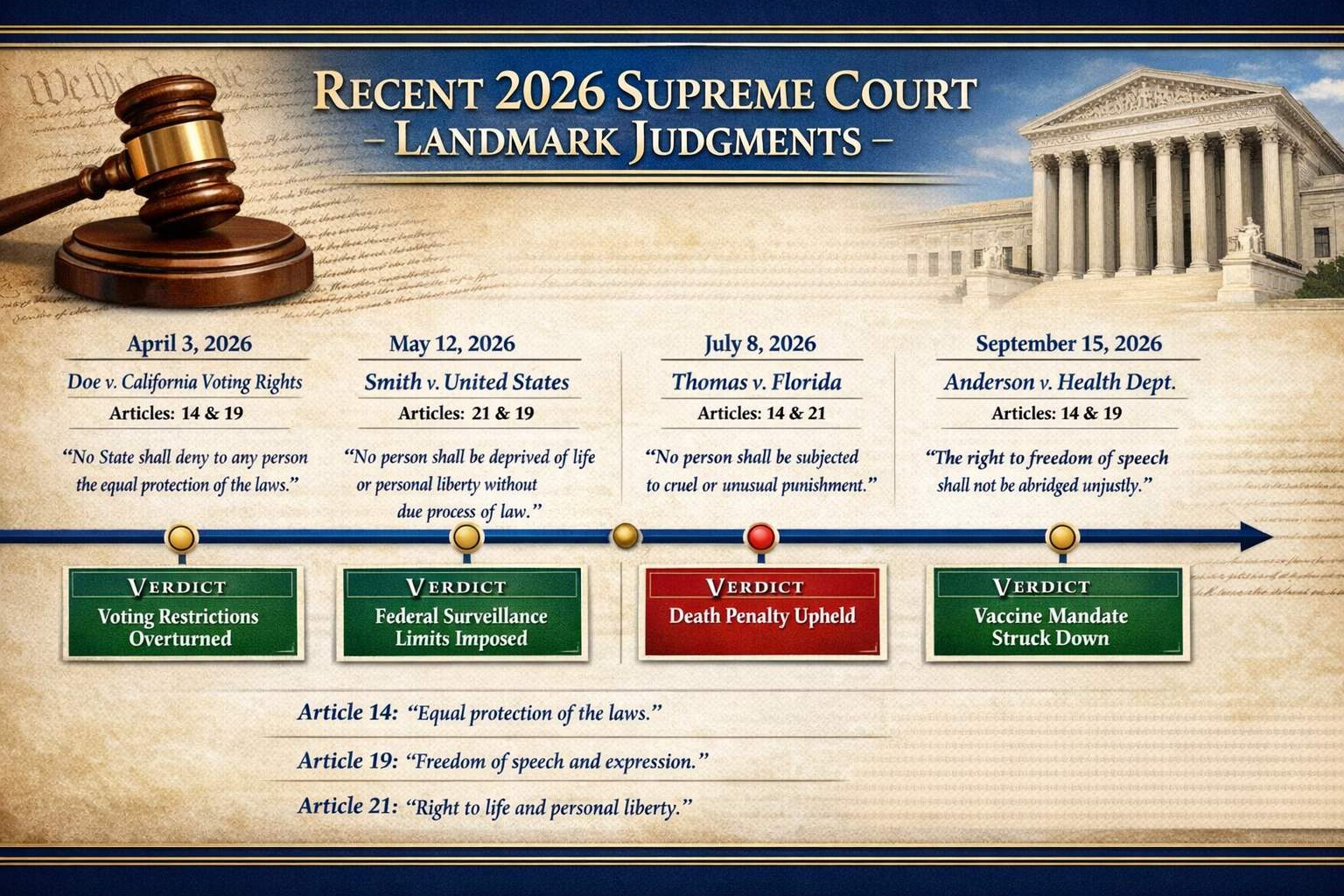
Constitutional law forms the backbone of legal reasoning in CLAT, and recent Supreme Court judgments provide the perfect lens to understand how constitutional principles apply in real-world scenarios. The 2026 judicial year has been particularly significant, with the Supreme Court delivering several landmark decisions that directly impact fundamental rights, federalism, and judicial review.
Why Recent Judgments Matter for CLAT Success
Let’s be honest—memorizing constitutional articles won’t get you far in modern CLAT. The exam has evolved to test your analytical skills through contemporary legal scenarios. Recent Supreme Court judgments serve as perfect case studies because they demonstrate how constitutional principles interact with current social, political, and economic realities.
For instance, the Supreme Court’s recent decision on UGC Regulations 2026 regarding caste-based discrimination definition showcases how Article 14 (equality before law) intersects with affirmative action policies.[1] This type of nuanced constitutional interpretation frequently appears in CLAT legal reasoning passages.
Your success is our mission at Lawgic Coaching, and we’ve noticed that students who understand the connection between recent judgments and constitutional principles consistently score higher in legal reasoning sections. The key lies in recognizing patterns in how the Court interprets fundamental rights and applies constitutional doctrines.
The Evolution of Constitutional Interpretation
Constitutional law isn’t static—it evolves with each Supreme Court judgment. The 2026 judicial decisions reveal three critical trends that CLAT aspirants must understand:
Progressive Interpretation of Fundamental Rights: Recent judgments show the Court expanding the scope of Article 21 (right to life and personal liberty) beyond traditional boundaries. The Court’s approach to bail provisions and departmental proceedings against judicial officers demonstrates this evolution.[1]
Balancing Individual Rights with State Authority: Cases involving anti-conversion laws highlight the ongoing tension between individual freedom of religion (Articles 25-28) and state police powers.[5] Understanding this balance is crucial for CLAT success.
Technological Integration in Constitutional Framework: The Court’s handling of cases involving online gaming regulations and digital voter roll management shows how constitutional principles adapt to technological advancement.[2]
These trends directly influence CLAT question patterns. When you understand how the Supreme Court approaches constitutional interpretation, you’ll recognize similar reasoning patterns in exam passages. This insight becomes your competitive advantage.
Breaking Down Landmark 2026 Supreme Court Judgments for CLAT Success
The Supreme Court’s 2026 decisions provide a treasure trove of constitutional law concepts that frequently appear in CLAT examinations. Let’s examine the most significant judgments and their CLAT relevance.
UGC Regulations and Equality Principles
The Supreme Court’s decision to refer UGC Regulations 2026 on caste-based discrimination to a larger bench represents a masterclass in constitutional interpretation.[1] The Division Bench’s concerns about the “restrictive and exclusionary” definition in Clause 3(c) directly relate to Article 14’s equality guarantee.
CLAT Connection: This judgment pattern frequently appears in legal reasoning passages. You’ll encounter scenarios where you must analyze whether a particular definition or classification violates equality principles. The key learning here is understanding when classifications become discriminatory versus when they serve legitimate state interests.
Practice Approach: When you see CLAT questions involving classification or discrimination, ask yourself:
- Does the classification have a rational nexus with the intended objective?
- Is the classification arbitrary or based on intelligible criteria?
- Does it violate the essence of equality before law?
Prevention of Corruption Act and Constitutional Validity
The split opinion on Section 17A of the Prevention of Corruption Act, 1988, offers excellent insights into constitutional validity analysis.[1] Justice K.V. Viswanathan’s validation subject to Lokpal recommendations versus Justice B.V. Nagarathna’s Article 14 violation finding demonstrates how the same constitutional provision can yield different interpretations.
CLAT Relevance: Split opinions frequently feature in legal reasoning passages because they showcase different approaches to constitutional interpretation. Understanding both majority and dissenting reasoning helps you tackle complex CLAT scenarios.
Strategic Insight: When CLAT presents conflicting legal positions, remember that constitutional validity often depends on:
- Legislative competence (whether the legislature had authority to enact the provision)
- Constitutional conformity (whether the provision aligns with fundamental rights)
- Procedural fairness (whether proper procedures were followed)
Executive Authority and Tax Collection Limits
The January 5, 2026 judgment establishing that “the executive cannot retain amounts collected under a levy imposed without lawful authority” provides crucial insights into separation of powers.[4] This decision clarifies the boundaries between executive and legislative authority in tax matters.
CLAT Application: Questions on federalism and separation of powers frequently test your understanding of these boundaries. The principle that executive authority cannot exceed legislative mandate appears regularly in constitutional law passages.
Exam Strategy: For questions involving executive overreach or legislative delegation, focus on:
- Whether the executive action has proper legislative backing
- If the delegation of power includes adequate guidelines
- Whether the executive is acting within constitutional bounds
Anti-Conversion Laws and Religious Freedom
The Supreme Court’s notice to Union and state governments regarding anti-conversion laws in multiple states represents a significant constitutional challenge.[5] The tension between state police powers and individual religious freedom under Articles 25-28 creates perfect CLAT scenario material.
Constitutional Framework: These cases demonstrate how fundamental rights aren’t absolute—they operate within reasonable restrictions. The Court’s approach to balancing individual freedom with state authority provides excellent analytical frameworks for CLAT preparation.
For comprehensive understanding of how these constitutional principles integrate into your overall CLAT preparation strategy, it’s essential to connect recent judgments with fundamental constitutional doctrines.
Electoral Process and Democratic Principles
The Bihar Special Intensive Revision (SIR) exercise case, involving 6.5 million voter exclusions, showcases how constitutional principles apply to electoral democracy.[3] The Supreme Court’s supervisory orders demonstrate judicial oversight of electoral processes while respecting Election Commission autonomy.
CLAT Insight: Electoral law questions often test your understanding of democratic principles, institutional autonomy, and judicial review scope. The Court’s balanced approach—directing transparency measures while avoiding micromanagement—illustrates constitutional boundaries in action.
Mastering Constitutional Doctrines Through Recent Case Studies
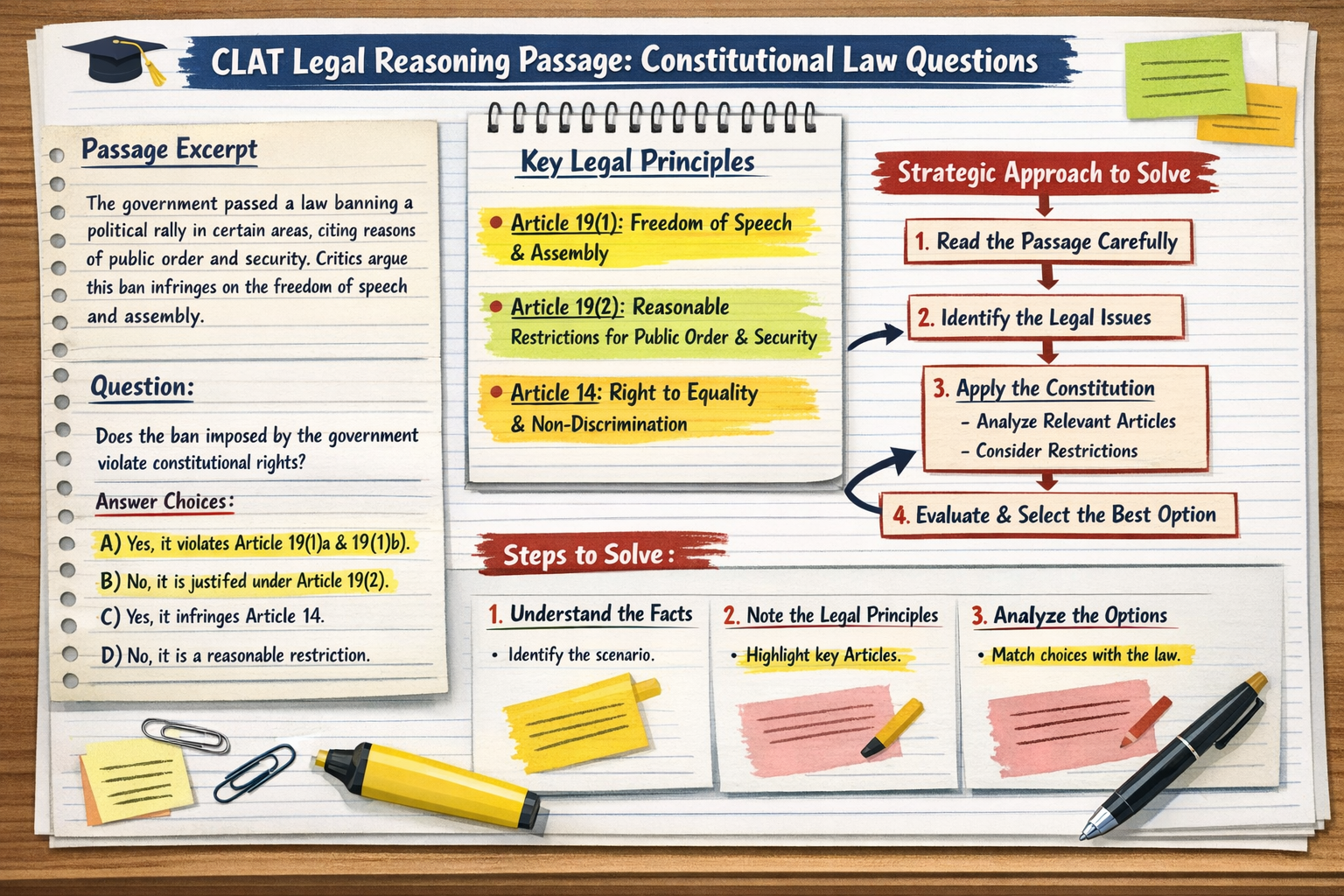
Understanding constitutional doctrines through recent Supreme Court judgments transforms abstract legal principles into practical analytical tools for CLAT success. Let’s explore how 2026 decisions illuminate core constitutional concepts that frequently appear in legal reasoning passages.
Article 14: Equality Before Law in Action
The Supreme Court’s 2026 decisions provide multiple examples of Article 14 application, from UGC regulations to corruption prevention measures. These cases demonstrate that equality doesn’t mean identical treatment—it means reasonable classification based on intelligible criteria.
The Flipkart Taxation Case: The Court’s decision upholding capital gains taxation on Flipkart Singapore shares illustrates how equality principles apply in international taxation.[1] The judgment shows that equal treatment under tax laws doesn’t prevent differential treatment based on residence or business structure.
CLAT Strategy: When analyzing equality questions, remember the twin test:
- Intelligible Differentia: Is there a logical basis for classification?
- Rational Nexus: Does the classification relate to the law’s objective?
Recent judgments consistently apply this framework, making it essential for CLAT preparation. You’ll find that legal reasoning passages often present scenarios requiring this analysis.
Article 19: Freedom of Speech and Expression
While direct Article 19 challenges were limited in 2026, the anti-conversion law notices indirectly touch upon expression of religious beliefs.[5] The Court’s approach to balancing individual expression with state authority provides valuable insights for CLAT aspirants.
Constitutional Boundaries: The Supreme Court’s handling of these cases shows that fundamental rights operate within a framework of reasonable restrictions. Understanding when restrictions become unreasonable is crucial for CLAT success.
Practical Application: For essential CLAT legal topics, focus on how courts balance individual rights with collective interests. This balance frequently appears in legal reasoning passages.
Article 21: Right to Life and Personal Liberty
The 2026 judgments significantly expanded Article 21’s scope, particularly in cases involving bail provisions and judicial officer protection. The Court’s decision that “mere wrong exercise of discretion in grant of bail cannot be ground for departmental proceedings” demonstrates Article 21’s protective scope.[1]
Evolving Interpretation: Article 21 has evolved from a narrow “procedure established by law” to encompassing due process elements. Recent judgments show this evolution continuing, with the Court protecting both individual liberty and institutional integrity.
CLAT Connection: Questions involving personal liberty, due process, and procedural fairness frequently test Article 21 understanding. The Court’s nuanced approach in 2026 cases provides excellent analytical frameworks.
Judicial Review and Constitutional Boundaries
The 2026 decisions showcase judicial review’s scope and limitations. The Court’s approach to electoral supervision, executive authority limits, and legislative validity demonstrates how judicial review operates within constitutional boundaries.
Separation of Powers: The tax collection judgment’s emphasis on legislative authority versus executive action illustrates separation of powers in practice.[4] This principle frequently appears in CLAT passages testing constitutional understanding.
Institutional Respect: The Court’s handling of High Court judge impeachment proceedings shows how judicial review respects institutional boundaries while ensuring constitutional compliance.[1] This balance is crucial for CLAT constitutional law questions.
Federalism and State-Centre Relations
Recent judgments involving state anti-conversion laws and central UGC regulations highlight federalism’s practical operation.[5] The Court’s approach to state versus central authority provides excellent CLAT preparation material.
Constitutional Distribution: Understanding how powers divide between Centre and states becomes crucial when analyzing federal structure questions. The 2026 cases demonstrate this distribution in action.
For students seeking comprehensive CLAT preparation guidance, understanding these constitutional doctrines through recent case studies provides both conceptual clarity and practical application skills.
Article 142: Extraordinary Constitutional Power
The Supreme Court’s use of Article 142 powers in granting equitable relief to a widow demonstrates this provision’s scope.[1] The Court’s decision to permit loan settlement despite expired schemes shows how Article 142 serves justice beyond ordinary legal remedies.
Constitutional Significance: Article 142 represents the Court’s inherent power to do complete justice. Understanding when and how this power operates helps in analyzing complex constitutional scenarios in CLAT.
Practical Wisdom: The Court’s restrained use of Article 142 in 2026 cases shows judicial wisdom—using extraordinary powers only when ordinary remedies prove inadequate. This principle frequently appears in constitutional law questions.
Strategic CLAT Preparation Using Constitutional Law and Recent Judgments
Transforming constitutional law knowledge and recent Supreme Court judgments into CLAT success requires strategic preparation that goes beyond mere memorization. The key lies in developing analytical skills that mirror judicial reasoning while building speed and accuracy for exam conditions.
Building Your Constitutional Analysis Framework
Recent Supreme Court judgments provide perfect templates for developing systematic constitutional analysis. When you encounter legal reasoning passages in CLAT, apply the same framework that judges use in constitutional interpretation.
Step 1: Identify Constitutional Provisions
Start by recognizing which constitutional articles or principles apply to the given scenario. The 2026 judgments show that most constitutional questions involve multiple provisions working together. For instance, the UGC regulations case involves Articles 14, 15, and 16 simultaneously.[1]
Step 2: Apply the Proportionality Test
Recent judgments consistently apply proportionality analysis—balancing individual rights against state interests. This approach appears frequently in CLAT passages, especially those involving fundamental rights restrictions.
Step 3: Consider Precedential Value
Understanding how recent judgments build upon or distinguish earlier precedents helps you analyze similar scenarios in CLAT. The Court’s approach to bail provisions in 2026 demonstrates this evolutionary process.[1]
No cookie-cutter approach here—each constitutional question requires careful analysis of facts, applicable law, and judicial reasoning. This analytical skill becomes your competitive advantage in CLAT legal reasoning sections.
Practicing with Real Judgment Scenarios
The most effective CLAT preparation involves practicing with scenarios derived from actual Supreme Court judgments. This approach helps you understand how constitutional principles apply in real-world situations while building familiarity with judicial reasoning patterns.
Case Study Method: Take the Prevention of Corruption Act split opinion and create practice questions.[1] How would you analyze a scenario where different judges reach opposite conclusions using the same constitutional provision? This type of analytical thinking frequently appears in CLAT.
Constitutional Conflict Resolution: Practice scenarios where multiple constitutional principles conflict. The anti-conversion law cases provide excellent examples of religious freedom versus state police powers.[5] Understanding how courts resolve such conflicts is crucial for CLAT success.
Federal Structure Questions: Use recent Centre-state disputes to practice federalism questions. The UGC regulations case demonstrates how constitutional distribution of powers works in practice.[1]
Developing Speed and Accuracy
Constitutional law questions in CLAT require both deep understanding and quick analysis. Recent judgments provide excellent practice material for developing both skills simultaneously.
Pattern Recognition: Study how the Supreme Court approaches similar constitutional issues across different cases. This pattern recognition helps you quickly identify relevant principles in CLAT passages.
Elimination Techniques: Understanding constitutional principles helps eliminate obviously incorrect options in CLAT multiple-choice questions. For instance, knowing that fundamental rights aren’t absolute helps eliminate extreme positions.
Time Management: Practice analyzing constitutional scenarios within CLAT time constraints. Proven strategies that actually work include focusing on key constitutional principles rather than getting lost in factual details.
Integrating Current Affairs with Constitutional Law
The 2026 Supreme Court judgments demonstrate how constitutional law intersects with current affairs. This integration is crucial for CLAT success, as legal reasoning passages often combine constitutional principles with contemporary issues.
Electoral Democracy: The Bihar voter roll case connects constitutional principles with electoral integrity.[3] Understanding how courts balance democratic participation with electoral accuracy helps in analyzing similar CLAT scenarios.
Technology and Rights: Recent judgments involving online gaming regulations and digital voter management show how constitutional principles adapt to technological change.[2] This adaptation frequently appears in CLAT passages.
Social Justice: Cases involving caste-based discrimination and religious conversion demonstrate how constitutional equality principles apply to contemporary social issues.[1][5] These applications provide excellent CLAT preparation material.
For students looking to enhance their preparation with expert guidance from top NLUs, understanding how recent judgments integrate with constitutional principles becomes even more valuable.
Mock Test Strategy for Constitutional Law
Effective mock test practice requires strategic focus on constitutional law questions that mirror recent Supreme Court reasoning patterns. This targeted approach helps identify weak areas while building confidence in strong topics.
Judgment-Based Questions: Practice questions derived from 2026 Supreme Court decisions. These questions test both constitutional knowledge and analytical skills simultaneously.
Cross-Topic Integration: Constitutional law rarely appears in isolation in CLAT. Practice questions that combine constitutional principles with other legal areas, mirroring the Court’s holistic approach in recent judgments.
Time-Bound Analysis: Develop the ability to quickly identify constitutional issues and apply relevant principles within CLAT’s time constraints. Recent judgments provide excellent practice scenarios for this skill development.
Building Long-Term Constitutional Understanding
Constitutional law mastery requires understanding both stable principles and evolving interpretations. Recent Supreme Court judgments provide insights into how constitutional law develops while maintaining core principles.
Doctrinal Evolution: Study how constitutional doctrines evolve through recent judgments. The expansion of Article 21 scope in 2026 cases demonstrates this evolution.[1] Understanding doctrinal development helps predict future legal trends and CLAT question patterns.
Institutional Dynamics: Recent judgments reveal how constitutional institutions interact and maintain balance. This understanding helps in analyzing complex CLAT scenarios involving multiple constitutional authorities.
Justice and Equity: The Court’s use of Article 142 powers demonstrates how constitutional law serves broader justice goals.[1] This perspective helps in analyzing CLAT questions involving equitable relief and constitutional remedies.
Flexible learning that fits your life means adapting these constitutional law insights to your individual preparation schedule while maintaining consistent progress toward CLAT success.
Conclusion
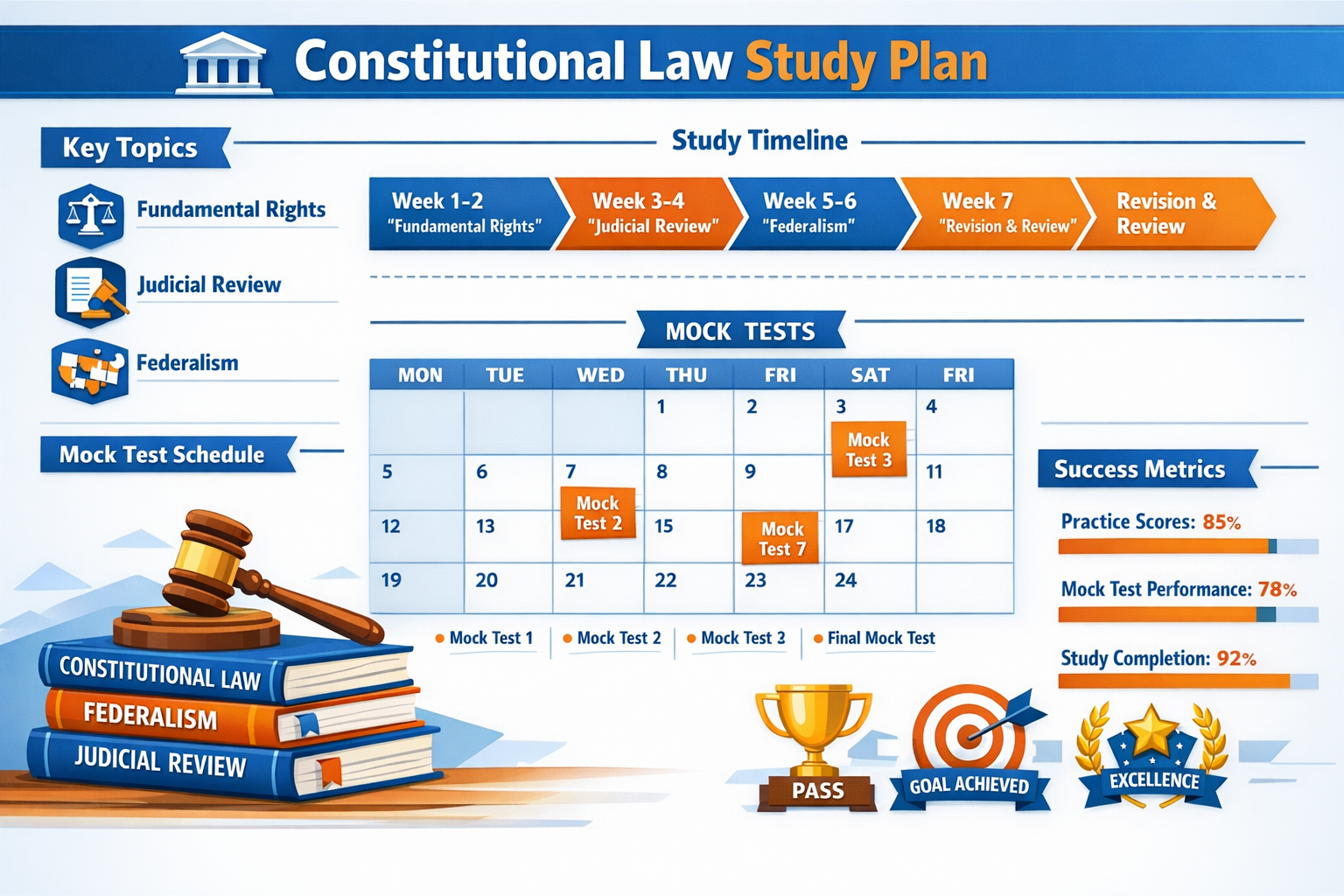
Constitutional Law & Recent Supreme Court Judgments: Essential CLAT Topics for 2027 represent more than just exam preparation—they’re your gateway to understanding how law shapes society and how legal reasoning works in practice. The 2026 Supreme Court decisions we’ve explored demonstrate that constitutional law isn’t a static subject but a living framework that evolves with societal needs while maintaining core democratic principles.
From the UGC regulations case highlighting equality principles to the anti-conversion law challenges involving religious freedom, these judgments provide perfect case studies for developing the analytical skills CLAT demands. The key insight is that constitutional law questions don’t just test your knowledge of articles and amendments—they examine your ability to think like a lawyer, analyzing complex scenarios and applying constitutional principles to reach reasoned conclusions.
Your success is our mission, and understanding these recent judgments gives you a significant advantage in CLAT 2027. The Supreme Court’s approach to balancing individual rights with state authority, resolving federal conflicts, and adapting constitutional principles to contemporary challenges provides the analytical framework you need for legal reasoning success.
Ready to transform your constitutional law preparation? Start by analyzing one recent Supreme Court judgment each week, focusing on the constitutional principles involved and how they might appear in CLAT scenarios. Practice creating legal reasoning questions from these judgments, and most importantly, develop the habit of thinking constitutionally about current events.
Remember, constitutional law mastery isn’t about memorizing provisions—it’s about understanding how these provisions work together to create a framework for justice, equality, and democratic governance. The 2026 Supreme Court judgments provide the perfect lens for developing this understanding while building the analytical skills that will serve you throughout your legal career.
For comprehensive preparation that combines constitutional law expertise with proven CLAT strategies, explore our complete CLAT 2027 exam structure and strategy guide and take the next step toward your law school dreams.