The CLAT 2025 results are out, and the data tells an incredible story. Top scorers who followed a balanced section-wise approach showed remarkable improvements: 35% accuracy boosts in Legal Reasoning and 30% gains in Logical Reasoning compared to those who focused on just one or two sections. Here’s the thing – your success is our mission, and we’ve analyzed exactly what worked for these toppers to create your roadmap for CLAT 2027.
With the CLAT 2027 exam scheduled for December 2026, you have a golden opportunity to implement these proven strategies that actually work. Let’s be honest – there’s no cookie-cutter approach here. Each section demands its unique preparation style, and we’re about to break down exactly how to master every single one.
Key Takeaways
• Legal Reasoning: Focus on constitutional law, landmark judgments, and daily legal news analysis for 35% accuracy improvement
• English Language: Build vocabulary through contextual reading and practice 450-word passages daily for speed and comprehension
• General Knowledge: Create a systematic current affairs tracking system covering last 12 months with emphasis on legal and constitutional developments
• Logical Reasoning: Master pattern recognition, critical reasoning, and analytical puzzles through structured daily practice
• Quantitative Techniques: Concentrate on basic arithmetic, data interpretation, and percentage calculations with time management focus
Understanding the CLAT 2027 Section-Wise Strategy Framework
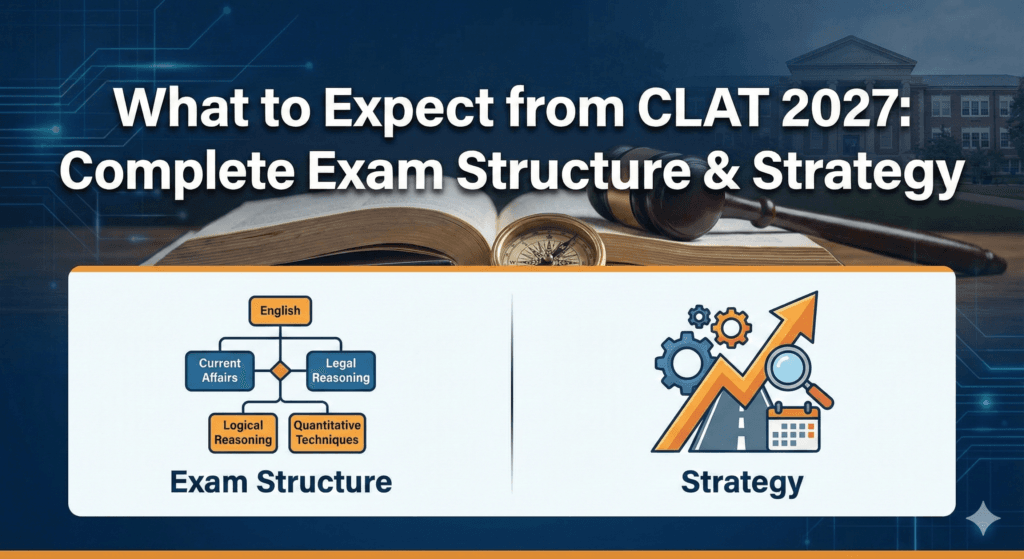
The Common Law Admission Test follows a specific pattern that rewards strategic preparation. With 120 multiple-choice questions distributed across five sections, each carrying equal weightage, your approach needs to be methodical and balanced [3]. The marking scheme awards +1 for correct answers while deducting -0.25 for wrong ones, making accuracy crucial alongside speed.
What makes CLAT 2027 different? The exam pattern has stabilized, giving you a clear advantage. You know exactly what to expect: 22-26 questions per section, 2 hours to complete, and passages that form the backbone of most sections. This predictability is your friend when you’re building a comprehensive preparation strategy.
The beauty of section-wise preparation lies in its systematic approach. Instead of random studying, you’re building specific skills for each area. Think of it like training for different sports – a swimmer doesn’t prepare the same way as a runner. Similarly, Legal Reasoning demands different cognitive skills than Quantitative Techniques.
Mastering Legal Reasoning: Your Foundation for Success
Legal Reasoning forms the heart of CLAT, and here’s where most aspirants either shine or struggle. The section tests your ability to apply legal principles to factual situations, understand constitutional provisions, and analyze judicial decisions. But don’t worry – we’ve helped thousands crack CLAT by focusing on what actually matters.
Building Your Legal Knowledge Base
Start with the Indian Constitution – it’s non-negotiable. Focus on fundamental rights, directive principles, and the basic structure doctrine. These topics appear consistently across CLAT papers. Create a systematic study plan covering constitutional law, criminal law basics, contract law principles, and tort law fundamentals.
Current legal developments deserve special attention. The 7 Ultimate CLAT Legal Topics for 2026 Success guide highlights exactly which areas to prioritize. Recent Supreme Court judgments, new legislation, and constitutional amendments from the past year will definitely appear.
Daily Practice Routine for Legal Reasoning
Here’s your winning formula: 30 minutes of legal news analysis every morning, followed by 45 minutes of passage-based practice. Read legal newspapers like Bar & Bench, LiveLaw, or the legal sections of major dailies. Don’t just read – analyze the legal implications and try to identify the underlying principles.
Practice legal reasoning passages daily. Start with 5 passages and gradually increase to 8-10. Time yourself strictly – you should complete each passage with its questions in 4-5 minutes maximum. Focus on identifying the legal principle, understanding the facts, and applying the principle systematically.
Advanced Legal Reasoning Techniques
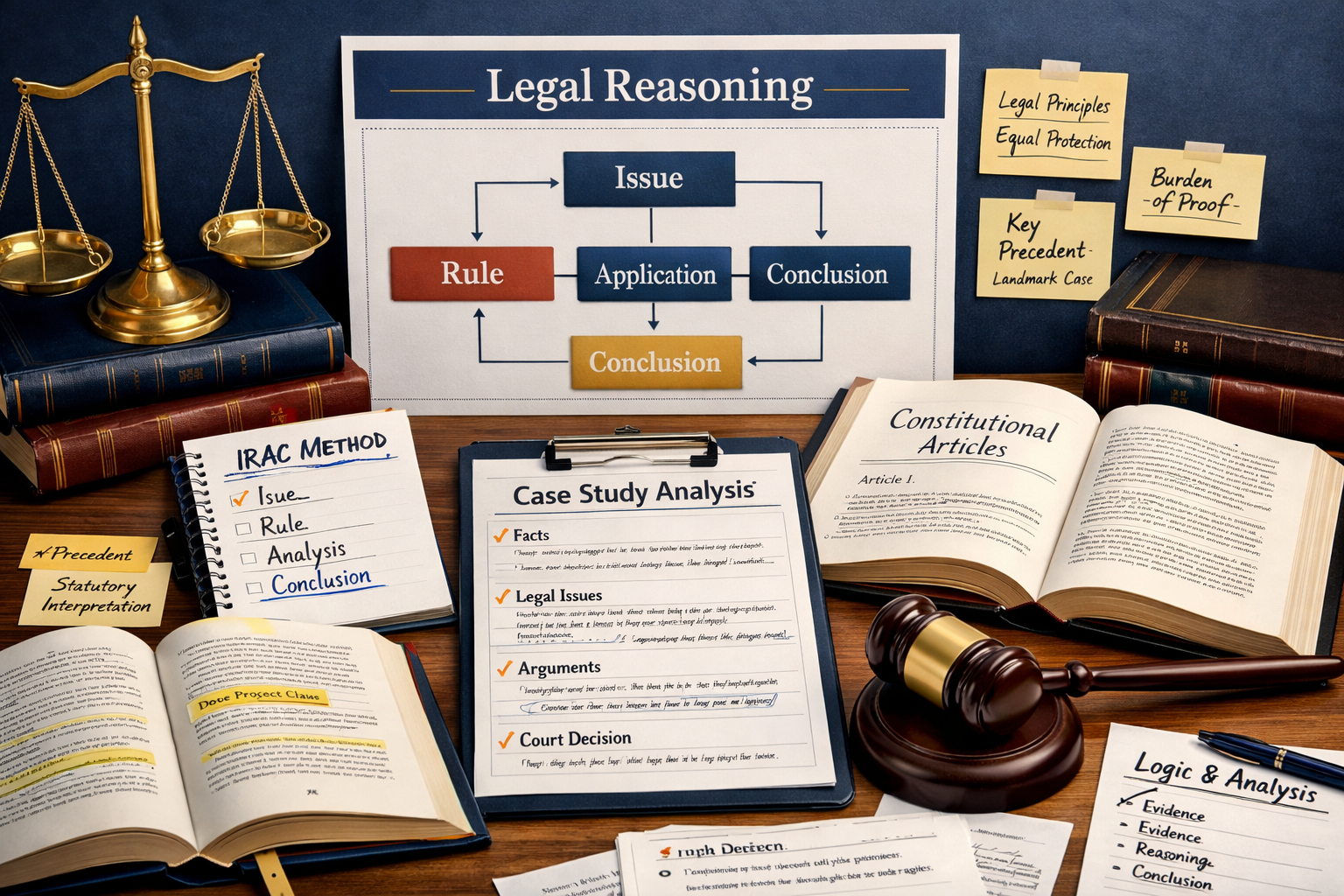
Master the IRAC method – Issue, Rule, Application, Conclusion. For every legal reasoning question, identify what legal issue is being tested, recall the relevant rule or principle, apply it to the given facts, and reach a logical conclusion. This structured approach prevents confusion and improves accuracy significantly.
Develop your legal vocabulary. Terms like “prima facie,” “res ipsa loquitur,” “caveat emptor,” and “actus reus” appear regularly. Create flashcards with legal terms, their meanings, and example applications. This vocabulary building directly translates to better comprehension during the exam.
English Language Excellence: Speed and Precision Combined
English Language in CLAT isn’t about complex grammar rules or obscure vocabulary. It’s about reading comprehension, vocabulary in context, and basic grammar application. The section typically includes 4-5 passages with questions on comprehension, vocabulary, and grammar – all within a tight time frame.
Reading Comprehension Mastery
The secret to excelling in English lies in your reading strategy for 450-word passages. Don’t read every word – scan for key information. Start with the questions first to understand what you’re looking for, then read the passage with purpose.
Practice active reading daily. Choose diverse topics – editorials, opinion pieces, literary excerpts, and factual articles. Time yourself to read a 450-word passage in 2 minutes maximum, then answer questions in another 3 minutes. This 5-minute per passage target is crucial for time management.
Vocabulary Building Strategy
Forget rote memorization of word lists. Build vocabulary contextually through reading. When you encounter unfamiliar words, note them with their context, meaning, and usage. Create sentences using these words. This approach ensures retention and proper usage understanding.
Focus on commonly tested vocabulary themes: legal terms, political terminology, economic concepts, and social issues. These areas provide the highest return on investment for CLAT vocabulary questions.
Grammar Essentials for CLAT
CLAT grammar questions are straightforward – they test basic concepts like subject-verb agreement, tenses, prepositions, and sentence correction. Spend 20 minutes daily on grammar practice, focusing on error identification and sentence improvement.
Common error patterns include incorrect verb forms, misplaced modifiers, and parallel structure violations. Practice with previous year questions to identify these patterns and develop quick recognition skills.
General Knowledge and Current Affairs: Your Competitive Edge
GK and Current Affairs can make or break your CLAT score. This section rewards consistent preparation and strategic coverage. With questions spanning national and international current affairs, static GK, and legal current affairs, your approach needs to be comprehensive yet focused.
Strategic Current Affairs Coverage
Create a systematic tracking system for current affairs from the past 12 months. Focus heavily on the last 6 months, as these events are most likely to appear. Use reliable sources like PIB, government websites, and reputed news portals for accurate information.
Our CLAT GK Backlog Clearance Guide provides a structured approach to covering vast GK syllabus efficiently. Don’t try to memorize everything – focus on high-yield topics that appear frequently.
Legal Current Affairs Priority
Legal current affairs deserve special attention in your GK preparation. Supreme Court judgments, new legislation, constitutional amendments, and legal reforms from the past year are goldmines for CLAT questions. Dedicate 15 minutes daily specifically to legal current affairs.
Track major legal developments: new bills passed by Parliament, significant Supreme Court and High Court judgments, changes in legal procedures, and appointments to constitutional positions. These topics bridge the gap between GK and Legal Reasoning sections.
Static GK Essentials
While current affairs dominate, don’t ignore static GK completely. Focus on constitutional provisions, historical events with legal significance, geography basics, and important personalities in law and politics. These topics provide easy scoring opportunities when prepared systematically.
Create monthly revision cycles for static GK. What you study in January should be revised in March, May, and so on. This spaced repetition ensures retention without overwhelming your daily schedule.
Logical Reasoning: Developing Analytical Thinking

Logical Reasoning tests your ability to analyze arguments, identify patterns, and draw logical conclusions. Unlike other sections that rely heavily on knowledge, this section rewards pure analytical thinking and systematic problem-solving approaches.
Core Logical Reasoning Skills
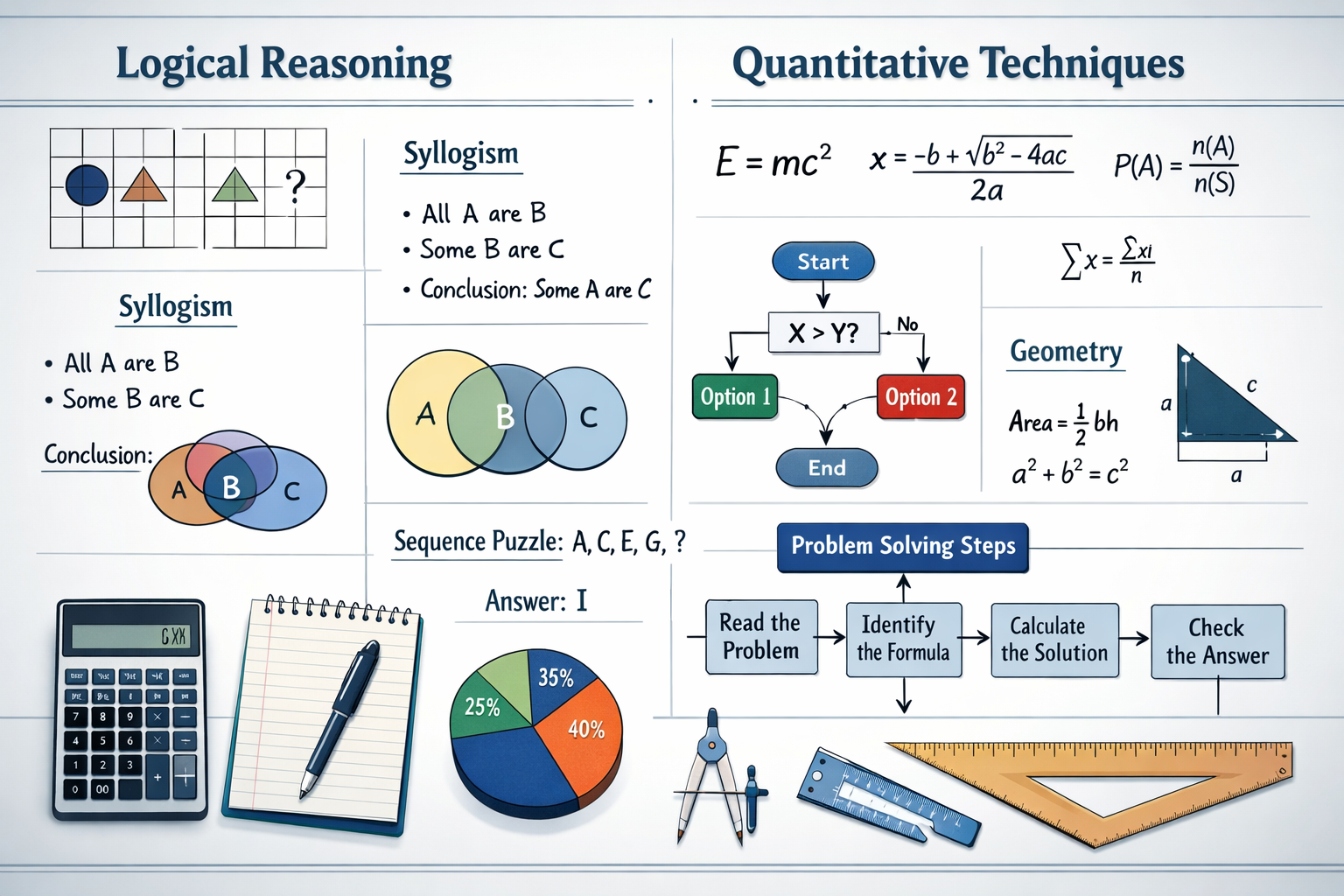
Master the fundamental question types: critical reasoning, analytical reasoning, and logical puzzles. Critical reasoning questions test argument analysis – identifying assumptions, strengthening or weakening arguments, and drawing conclusions. Practice these daily with a focus on understanding argument structure.
Analytical reasoning involves arrangements, groupings, and logical sequences. These questions require systematic approach and careful attention to given conditions. Develop a standard method for tackling each type – this consistency improves both speed and accuracy.
Pattern Recognition and Problem-Solving
Logical Reasoning success depends on pattern recognition. Regular practice helps you identify question types quickly and apply appropriate solving techniques. Spend 45 minutes daily on varied logical reasoning questions, timing yourself strictly.
For logical reasoning section mastery, focus on understanding why wrong answers are incorrect. This negative analysis strengthens your logical thinking and prevents similar mistakes in the future.
Advanced Logical Reasoning Techniques
Develop elimination strategies for complex questions. When direct solving seems difficult, eliminate obviously wrong options first. This approach improves your chances even when you’re unsure about the exact answer.
Practice assumption identification regularly. Many logical reasoning questions hinge on unstated assumptions. Training yourself to spot these assumptions quickly gives you a significant advantage in critical reasoning questions.
Quantitative Techniques: Efficiency Over Complexity
Quantitative Techniques in CLAT focuses on basic mathematical concepts, data interpretation, and practical problem-solving. The section doesn’t test advanced mathematics but rewards speed and accuracy in fundamental calculations.
Essential Mathematical Concepts
Master the basics: percentages, ratios and proportions, averages, profit and loss, simple and compound interest, and basic geometry. These topics form 80% of quantitative questions in CLAT. Don’t get distracted by complex mathematical concepts that rarely appear.
Focus on mental calculation techniques and shortcut methods. Quick calculation skills are crucial when you have limited time per question. Practice daily arithmetic to improve your calculation speed and accuracy.
Data Interpretation Mastery
Data Interpretation questions appear regularly in CLAT quantitative sections. Practice reading charts, graphs, tables, and statistical data quickly and accurately. Focus on identifying key information and relevant data points for answering specific questions.
Develop a systematic approach to DI questions: read the question first, identify required data, perform calculations, and verify your answer. This structured method prevents errors and saves valuable time during the exam.
Time Management in Quantitative Section
Quantitative questions should be solved in 1.5-2 minutes maximum per question. If a question takes longer, mark it for later and move on. This section often determines your overall time management success in CLAT.
Practice approximation techniques for complex calculations. CLAT options are usually distinct enough that precise calculations aren’t always necessary. Smart approximation can save significant time without compromising accuracy.
Creating Your Daily Study Schedule
Effective CLAT preparation requires a balanced daily routine that covers all sections systematically. Based on successful candidates’ experiences, here’s a proven daily schedule framework that you can adapt to your specific needs and timeline.
Morning Session (2.5 hours)
Start with Legal Reasoning (45 minutes) when your mind is fresh. Practice 6-8 passages with questions, focusing on accuracy over speed initially. Follow this with Current Affairs (30 minutes) – read legal news, make notes of important developments, and review previous day’s notes.
Dedicate 45 minutes to English Language practice. Read 2-3 passages, practice vocabulary questions, and solve grammar exercises. End the morning session with 30 minutes of quantitative practice covering basic arithmetic and data interpretation.
Evening Session (2 hours)
Focus on Logical Reasoning (45 minutes) in the evening when analytical thinking peaks for most students. Practice varied question types and time yourself strictly. Follow with GK revision (30 minutes) covering static topics and reviewing current affairs notes.
Reserve the final 45 minutes for mock tests or sectional tests. Regular testing helps identify weak areas and improves time management. Analyze your performance immediately after each test to maximize learning.
Weekly Review and Adjustment
Conduct weekly performance analysis every Sunday. Identify sections where you’re consistently struggling and adjust your daily time allocation accordingly. Flexible learning that fits your life means adapting your schedule based on performance data, not rigid adherence to a fixed routine.
Mock Test Strategy and Performance Analysis
Mock tests are your reality check and improvement catalyst combined. The way you approach mock tests determines how effectively they contribute to your CLAT preparation. Here’s how to maximize their impact on your performance.
Strategic Mock Test Schedule
Take one full-length mock test weekly initially, increasing to twice weekly in the final two months. This frequency allows adequate preparation time between tests while maintaining regular assessment. Don’t take mocks daily – it leads to burnout without proportional improvement.
Choose mock tests that closely replicate CLAT pattern and difficulty level. Poor quality mocks can mislead your preparation and create false confidence or unnecessary panic. Our mock test analysis guide explains how to select and utilize mock tests effectively.
Comprehensive Performance Analysis
Spend equal time analyzing your mock test as you spent taking it. This analysis is where real learning happens. Identify not just wrong answers but also questions you answered correctly by guessing. Both need attention for different reasons.
Create a detailed error log categorizing mistakes: conceptual errors, silly mistakes, time management issues, and knowledge gaps. This categorization helps you address each type of error with specific strategies rather than generic “study more” approaches.
Section-Wise Improvement Tracking
Track your section-wise performance trends over multiple mocks. Look for patterns – are you consistently weak in specific question types within sections? Do certain topics repeatedly cause problems? This data-driven approach ensures targeted improvement efforts.
Set realistic improvement targets based on your baseline performance. Expecting dramatic improvements overnight leads to frustration. Aim for steady, consistent progress in accuracy and time management across all sections.
Final Month Preparation Strategy
The final month before CLAT 2027 requires a strategic shift from learning to consolidation and optimization. Your preparation approach should focus on strengthening existing knowledge rather than learning new concepts.
Revision and Consolidation
Create comprehensive revision notes for each section covering key concepts, formulas, and important facts. These notes should be concise enough to review completely in 2-3 hours. Quality revision materials are crucial for last-minute preparation.
Focus on high-yield topics that frequently appear in CLAT. Don’t try to cover every possible topic in the final month. Strategic coverage of important areas yields better results than superficial coverage of everything.
Exam Day Simulation
Practice complete exam simulation including timing, environment, and stress management. Take mock tests at the same time as your actual exam to adjust your biological clock. This preparation reduces exam day anxiety and improves performance.
Develop your exam day strategy for section-wise time allocation, question selection, and stress management. Having a clear plan reduces decision-making pressure during the actual exam and ensures optimal performance.
Building Confidence and Managing Exam Stress
CLAT preparation isn’t just about academic knowledge – mental preparation and stress management play crucial roles in your success. Many well-prepared candidates underperform due to exam anxiety and poor stress management.
Confidence Building Techniques
Regular small victories build lasting confidence. Set daily achievable targets and celebrate their completion. This positive reinforcement cycle maintains motivation throughout your preparation journey.
Practice positive self-talk and visualization techniques. Imagine yourself confidently solving questions and managing time effectively during the exam. This mental rehearsal prepares your subconscious mind for success.
Stress Management Strategies
Develop healthy study habits that include regular breaks, physical exercise, and adequate sleep. Burnout prevention is more important than extra study hours. A well-rested mind performs significantly better than an exhausted one.
Learn quick stress relief techniques for exam day: deep breathing, positive affirmations, and brief meditation. These techniques help manage anxiety spikes during the actual exam and maintain optimal performance levels.
Conclusion
Your CLAT 2027 Section-Wise Strategy for mastering Legal Reasoning, English, GK, Logical, and Quantitative Techniques isn’t just about studying harder – it’s about studying smarter with proven strategies that actually work. The 35% accuracy improvements in Legal Reasoning and 30% gains in Logical Reasoning achieved by successful candidates prove that systematic, balanced preparation delivers results.
Remember, expert guidance without the premium price tag doesn’t mean compromising on quality. Real mentors from top NLUs have helped thousands crack CLAT using these exact strategies. Your success is our mission, and with personalized attention you deserve, flexible learning that fits your life becomes the foundation for achieving your law school dreams.
Your next steps are clear:
- Implement the daily study schedule starting tomorrow
- Begin systematic current affairs tracking immediately
- Take your first full-length mock test this week
- Create section-wise error logs for targeted improvement
- Join our comprehensive CLAT preparation program for personalized mentorship
Let’s build your law career together with accessible education for serious aspirants. Results speak louder than promises, and your CLAT 2027 success story starts with the strategy you implement today.
References
[1] Clat 2026 Exam Date Out Complete Schedule – https://law.careers360.com/articles/clat-2026-exam-date-out-complete-schedule[2] Clat 2026 Exam Overview Key Dates – https://www.lloydlawcollege.edu.in/blog/clat-2026-exam-overview-key-dates.html
[3] Clat 2026 Exam Date Registration Syllabus Eligibility Preparation – https://sageuniversity.in/blogs/clat-2026-exam-date-registration-syllabus-eligibility-preparation
[4] Clat 2026 Counselling To Begin Soon For Admission To National Law Universities 9829832 – https://www.ndtv.com/education/clat-2026-counselling-to-begin-soon-for-admission-to-national-law-universities-9829832
[5] Index – https://aiclet.org/index.html
[6] Clat 2026 Latest Updates And Instructions – https://www.nls.ac.in/news-events/clat-2026-latest-updates-and-instructions/
[7] Clat 2026 – https://consortiumofnlus.ac.in/clat-2026/