Here’s something that’s catching every CLAT 2026 aspirant off guard: the traditional time allocation strategies you’ve been following are completely outdated. The Sectional Time Management Breakdown: Why English and Legal Reasoning Now Eat More Time Than Quant in CLAT 2026 reveals a fundamental shift in how successful candidates approach the exam.
You know what’s really happening? Dense reading comprehension passages and layered legal reasoning sections are becoming the new time-killers, while quantitative techniques—once considered the most challenging—now demands the least time investment. This isn’t just about working faster; it’s about working smarter with a completely reimagined approach to sectional timing.
Key Takeaways
• Legal Reasoning requires 30-35 minutes (highest allocation) due to 450-500 word passages and 35-39 questions, making it the most time-intensive section
• English gets only 20-25 minutes despite heavy passage content because well-prepared candidates can process it faster than legal texts
• Quantitative Techniques needs just 10 minutes—the shortest allocation—due to reduced weightage of only 13-17 questions
• No sectional time limits means strategic self-allocation across the 120-minute window is crucial for maximizing scores
• Mock test practice is essential for personalizing your timing strategy based on individual strengths and reading speed
Understanding CLAT 2026’s Time Allocation Revolution
The Sectional Time Management Breakdown: Why English and Legal Reasoning Now Eat More Time Than Quant in CLAT 2026 starts with understanding a crucial fact: CLAT 2026 operates without fixed time boundaries for individual sections [1]. You’re managing a single 2-hour window across all five sections, requiring strategic self-allocation rather than rigid adherence to section-specific clocks.
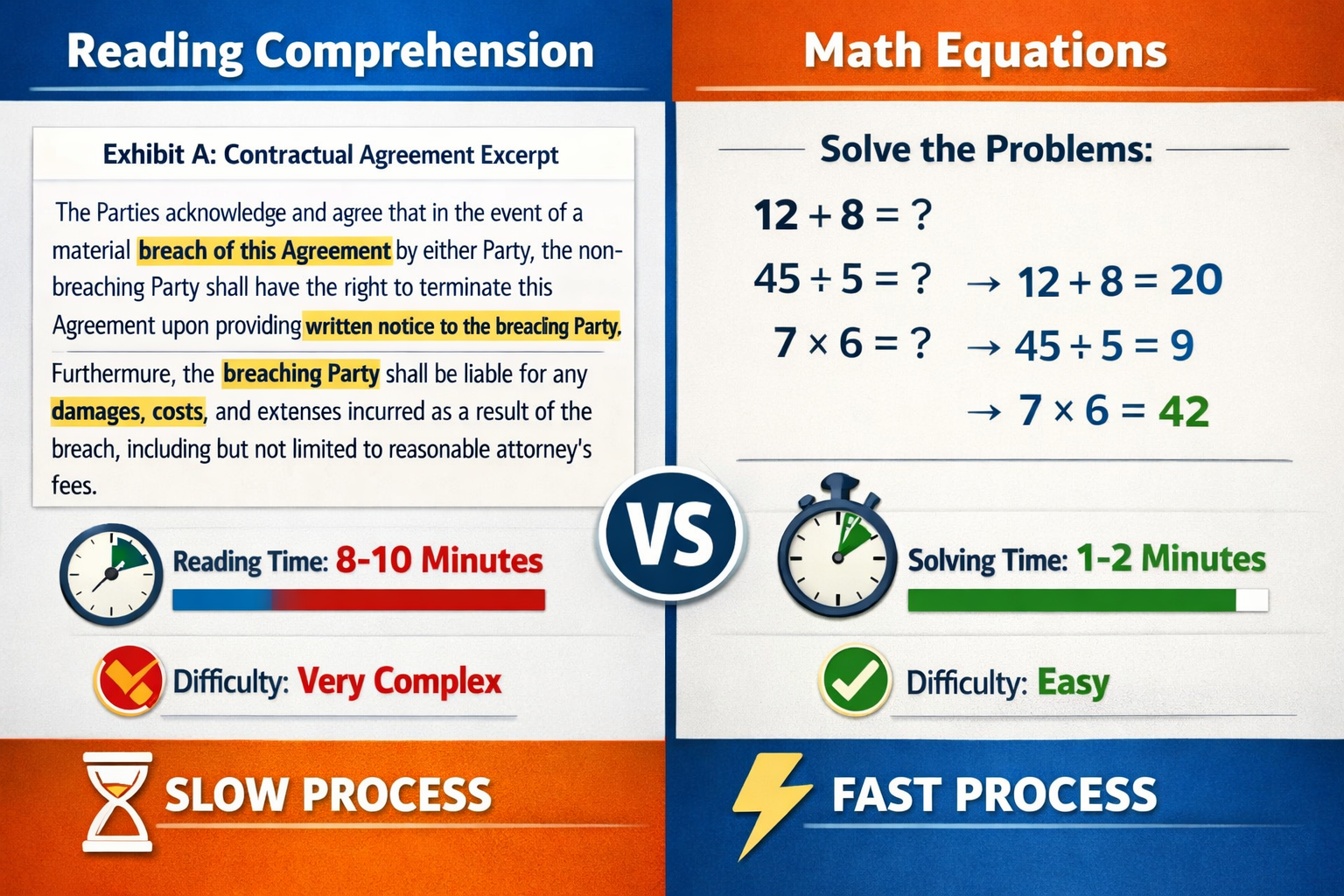
This freedom comes with responsibility. Legal Reasoning now demands 30-35 minutes of your precious 120-minute exam window [2]. Why such a massive chunk? These passages typically run 450-500 words each, and you’re facing 35-39 questions that require deep comprehension and legal analysis.
But here’s where it gets interesting. English, despite being equally passage-heavy, receives only 20-25 minutes in the optimal allocation strategy [2]. The reasoning? Well-prepared candidates can process English comprehension faster than complex legal texts. It’s about accessibility, not just volume.
The Quantitative Techniques Reality Check
Remember when everyone stressed about math being the time-killer? Those days are over. Quantitative Techniques now gets the shortest allocation—just 10 minutes [2]. With only 13-17 questions out of 120 total, it holds the lowest weightage in your final score.
This shift reflects a fundamental change in CLAT’s focus. The exam has evolved from testing computational speed to evaluating reading comprehension, analytical thinking, and legal reasoning abilities. Our comprehensive CLAT preparation timeline reflects these changing priorities.
General Knowledge gets capped at 15 minutes maximum [2], despite holding 35-39 questions—tied for the highest weightage. This might seem counterintuitive, but here’s the strategy: GK questions are typically direct and factual, requiring less processing time than passage-based sections.
Why Passage-Heavy Sections Dominate Your Clock
The Sectional Time Management Breakdown: Why English and Legal Reasoning Now Eat More Time Than Quant in CLAT 2026 becomes clear when you examine the content structure. Current Affairs and Legal Reasoning combined feature approximately 100 questions requiring comprehension across lengthy passages [5].
Each passage demands active reading, comprehension, and analysis before you can even attempt the questions. Compare this to Quantitative Techniques, which features standalone problems with direct solution paths. The cognitive load is entirely different.
The Reading Fatigue Factor
Let’s be honest about what’s really happening in these sections. Reader’s fatigue during CLAT English passages is a real challenge that directly impacts your timing strategy. Dense legal language, complex sentence structures, and unfamiliar terminology slow down even the strongest readers.
This is why Legal Reasoning gets 25-30% of your total exam time despite representing roughly 30% of questions. The processing overhead is significantly higher than mathematical calculations.
Your success depends on building reading stamina and comprehension speed during preparation. Strategic CLAT preparation tips emphasize regular passage reading practice as the foundation of effective time management.
Strategic Skip Patterns
With negative marking and no sectional cutoff requirements, candidates should skip time-consuming questions rather than exhaust minutes on difficult items [2]. This principle justifies flexible time allocation—if you encounter particularly challenging legal reasoning passages, move on and reallocate that time to more efficiently solvable questions.
The exam rewards strategic thinking over stubborn persistence. Understanding when CLAT becomes challenging helps you develop this skip-and-return mentality.
Optimizing Your Personal Timing Strategy Through Mock Tests
Here’s where the Sectional Time Management Breakdown: Why English and Legal Reasoning Now Eat More Time Than Quant in CLAT 2026 becomes personal. Optimal time allocation varies significantly by candidate [2]. Some might complete Quantitative Techniques in 8 minutes, while others need the full 10-minute allocation.
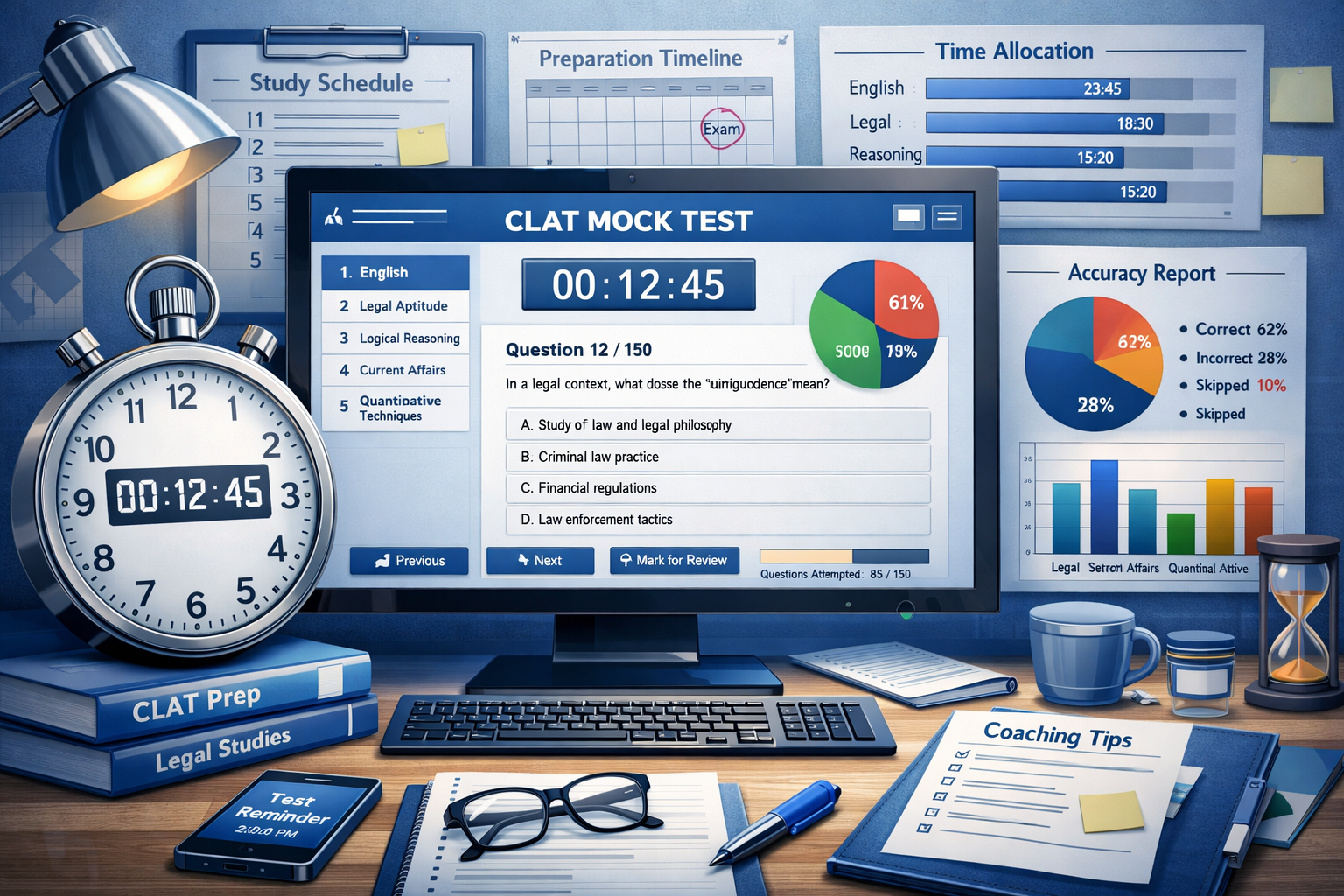
Mock tests are essential for identifying your timing patterns and personal strengths. During practice, track your per-section timing carefully:
Recommended Starting Allocation:
- Legal Reasoning: 30-35 minutes
- Logical Reasoning: 25-30 minutes
- English: 20-25 minutes
- General Knowledge: 15 minutes
- Quantitative Techniques: 10 minutes
But here’s what matters more than these numbers: your personal optimization through consistent practice.
Building Section-Specific Speed
Improving vocabulary and comprehension skills directly reduces per-question solving time in the highest time-consuming sections. This enables better overall time management through competency building rather than speed alone [4].
For quantitative techniques, focusing on must-do topics for non-math students ensures you can maximize your 10-minute allocation efficiently.
Technology-Enhanced Practice
Modern CLAT preparation leverages technology for realistic time-pressure simulations. Online coaching platforms now design mock tests that replicate the exact timing pressures you’ll face in CLAT 2026.
These platforms track your sectional timing patterns, identify bottlenecks, and suggest personalized allocation adjustments. Your success is our mission, and we’ve helped thousands crack CLAT by providing this level of detailed timing analysis.
The Weightage-Based Approach
Expert guidance emphasizes allocating time based on sectional weightage rather than question count [4]. Current Affairs and Legal Reasoning warrant proportionally more time than Quantitative Techniques, reflecting their importance in final scores.
This strategy shift from equal time distribution to weighted allocation marks the difference between average and exceptional CLAT performance. Comprehensive revision strategies incorporate this weightage-based thinking throughout your preparation.
Conclusion
The Sectional Time Management Breakdown: Why English and Legal Reasoning Now Eat More Time Than Quant in CLAT 2026 represents more than just a timing strategy—it’s a fundamental shift in how CLAT tests legal aptitude. Dense passages and complex reasoning have replaced computational speed as the primary time challenges.
Your path to CLAT success starts with embracing this new reality. Allocate 30-35 minutes to Legal Reasoning, maintain 20-25 minutes for English despite its passage density, and limit Quantitative Techniques to just 10 minutes. But remember, these are starting points, not rigid rules.
Practice with realistic mock tests to discover your personal timing patterns. Build reading stamina through regular passage practice. Develop strategic skip patterns that maximize your score potential within the 120-minute window.
The candidates who master this new timing paradigm will find themselves with a significant advantage in CLAT 2026. Expert guidance without the premium price tag, flexible learning that fits your life, and proven strategies that actually work—that’s how you transform timing challenges into competitive advantages.
Ready to revolutionize your CLAT timing strategy? Start with our comprehensive study strategies and build the skills that matter most in 2026’s evolved exam format.
References
[1] Clat 2026 All The Latest Changes You Must Know – https://clatnlti.com/blog-details/164/clat-2026-all-the-latest-changes-you-must-know
[2] Clat Time Management – https://www.imsindia.com/blog/clat/clat-time-management/
[3] Decoding The Mba Admission Process In India (2025 26) A Step By Step Guide – https://gyanplug.com/blogs/decoding-the-mba-admission-process-in-india-(2025-26)-a-step-by-step-guide
[4] Time Management For Clat Blogid 109735 – https://www.shiksha.com/law/articles/time-management-for-clat-blogId-109735
[5] Clat Time Management – https://law.careers360.com/articles/clat-time-management

