The legal landscape has transformed dramatically, and so has the CLAT examination. Gone are the days when memorizing bare legal provisions would guarantee success. Today’s CLAT demands something far more sophisticated: the ability to navigate complex ethical dilemmas, interpret contemporary constitutional challenges, and apply legal principles to cutting-edge issues like AI regulation and data privacy. Mastering Legal Reasoning for CLAT 2027: From Theory to Application-Based Case Studies isn’t just about understanding law—it’s about thinking like a lawyer in our rapidly evolving world.
Legal Reasoning comprises 30 questions out of 120 total, representing 25% of the exam weightage[1]. With such significant stakes, aspirants can’t afford to approach this section with outdated strategies. The shift toward application-based questions means you’ll encounter real Supreme Court judgments, contemporary legal scenarios, and ethical puzzles that mirror the challenges today’s legal professionals face daily.
Key Takeaways
• Contemporary Focus: CLAT 2027 emphasizes modern legal challenges including AI regulation, data privacy, and environmental law through real case studies
• Application Over Memory: Success requires analyzing legal principles in context rather than memorizing statutory provisions
• Strategic Practice: Mastering 4-6 passage-based questions within time constraints demands systematic preparation and proven techniques
• Real-World Relevance: Questions mirror actual legal scenarios, preparing aspirants for both exam success and future legal practice
• Comprehensive Approach: Effective preparation combines theoretical understanding with practical application through Supreme Court judgments and contemporary cases
The Evolution of Legal Reasoning in CLAT: Why Traditional Methods Fall Short

Here’s the thing about CLAT preparation—what worked five years ago simply doesn’t cut it anymore. The examination has undergone a fundamental shift that many aspirants (and even some coaching institutes) haven’t fully grasped yet.
Traditional legal reasoning preparation focused heavily on memorizing sections of various acts, understanding basic legal principles, and solving straightforward application questions. Students would cram provisions from the Indian Penal Code, Constitutional articles, and landmark judgments, hoping to recognize familiar patterns during the exam.
But CLAT 2027 operates on an entirely different paradigm. The test consists of 4-6 passages in each section followed by multiple-choice questions based on those passages[3]. These aren’t your typical textbook excerpts—they’re sophisticated legal scenarios drawn from contemporary issues that require nuanced understanding and analytical thinking.
The Contemporary Legal Challenge
Consider this: when was the last time you encountered a CLAT question about cryptocurrency regulation, deepfake technology, or climate change litigation? These aren’t hypothetical scenarios—they’re the legal frontiers that today’s law students and practitioners must navigate. The examination now reflects this reality by incorporating:
Constitutional Dilemmas in the Digital Age: Questions exploring how fundamental rights apply to social media, online privacy, and digital surveillance. Recent passages have drawn from Supreme Court judgments on the right to be forgotten and data protection.
Environmental Law Integration: Climate change litigation, environmental clearances for development projects, and the balance between economic growth and ecological preservation feature prominently in contemporary CLAT papers.
Emerging Technology Regulation: AI governance, autonomous vehicle liability, and biotechnology patents represent the new frontier of legal reasoning questions.
Ethical Complexities: Modern legal scenarios often involve competing interests where multiple legal principles apply simultaneously, requiring sophisticated analytical skills.
Why This Shift Matters for Your Preparation
The implications are profound. Students who rely on traditional preparation methods—those focused on rote learning and pattern recognition—find themselves struggling with passages that demand genuine legal reasoning abilities. The exam now tests whether you can think like a lawyer, not just recall like a law student.
This evolution aligns with what top National Law Universities seek in their students. They want individuals who can grapple with complex legal issues, understand the intersection of law and society, and contribute meaningfully to legal discourse from day one. Avoiding common preparation mistakes becomes crucial when the examination itself has evolved so significantly.
The marking scheme remains consistent—each question carries 1 mark, with 0.25 marks deducted for every incorrect answer[1][3]—but the cognitive demands have intensified considerably. Success now requires a completely different preparation strategy, one that emphasizes understanding over memorization and application over recognition.
Mastering Legal Reasoning for CLAT 2027: Contemporary Case Study Analysis
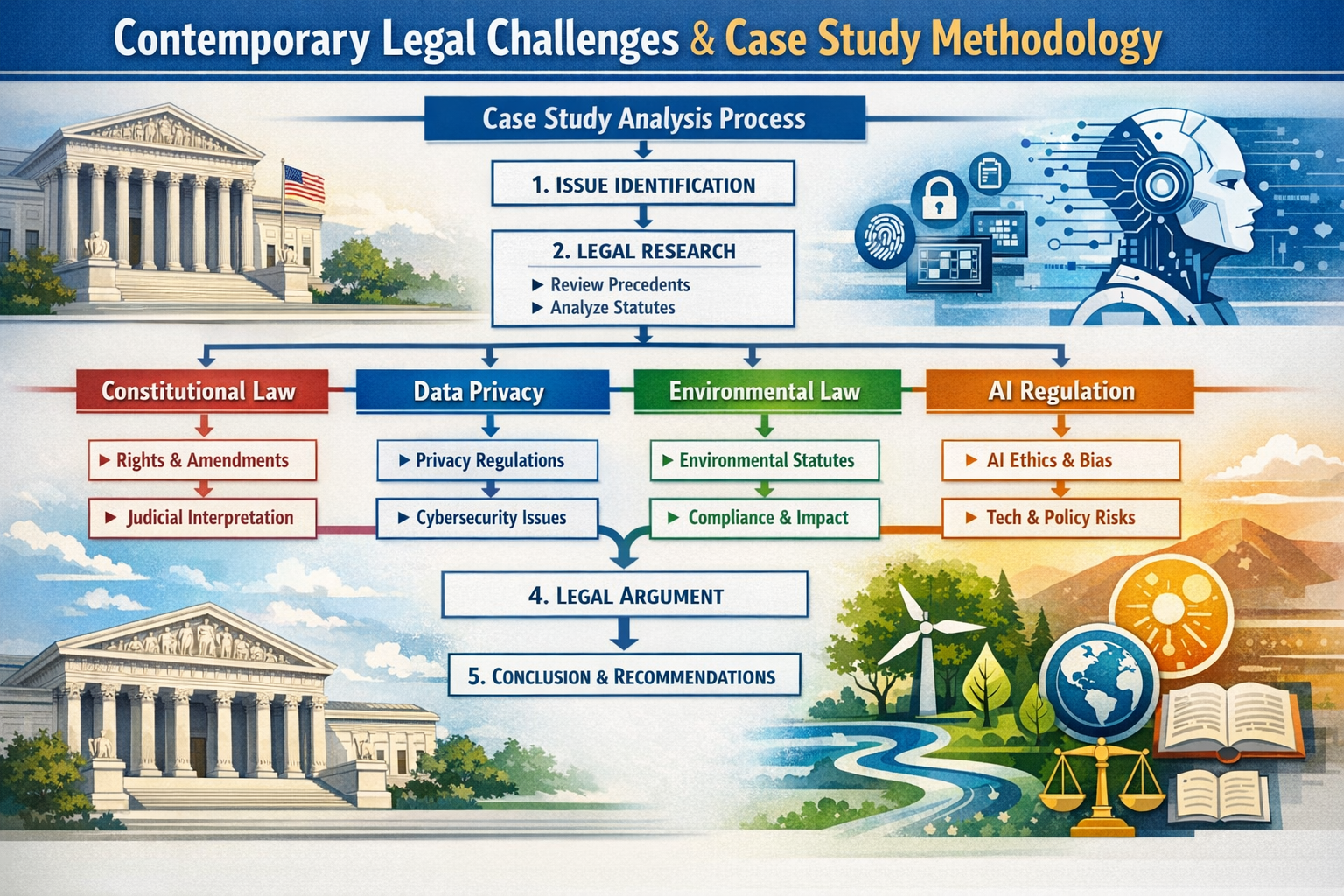
Let’s dive into what modern legal reasoning actually looks like in practice. The best way to understand this transformation is through real examples that mirror the complexity and sophistication of current CLAT passages.
Supreme Court Judgment Analysis: The Foundation of Modern CLAT
Recent CLAT papers have drawn extensively from landmark Supreme Court judgments, but not in the way you might expect. Instead of asking about the basic facts or holdings, questions probe deeper into the legal reasoning, the balance of competing interests, and the broader implications for society.
Case Study 1: Privacy vs. National Security
Consider a passage based on the Justice K.S. Puttaswamy (Retd.) vs. Union of India judgment, which established privacy as a fundamental right. A typical CLAT question might present a scenario where:
“The government proposes mandatory biometric authentication for all digital transactions to prevent money laundering. Citizens challenge this requirement citing privacy rights. The government argues that financial crimes pose a significant threat to national security and economic stability.”
The questions that follow don’t ask you to recall Article 21 or the nine-judge bench composition. Instead, they probe:
- How should courts balance individual privacy against collective security?
- What constitutes “reasonable restrictions” in the digital age?
- Which legal test should apply when fundamental rights conflict with legitimate state interests?
This approach requires you to understand legal principles deeply enough to apply them to novel situations. You can’t simply memorize the Puttaswamy judgment—you must grasp the underlying reasoning well enough to extend it to new contexts.
Environmental Law and Constitutional Principles
Environmental law has emerged as a particularly rich source for CLAT passages because it inherently involves balancing competing interests—economic development versus ecological preservation, present needs versus future sustainability, individual rights versus collective welfare.
Case Study 2: The Green Tribunal Dilemma
A recent-style passage might describe:
“A state government approves a mining project that will create 10,000 jobs in an economically backward region. Environmental activists challenge the clearance, citing potential groundwater contamination and forest destruction. The National Green Tribunal must decide between immediate economic benefits and long-term environmental costs.”
The legal reasoning questions that emerge from such scenarios test your ability to:
- Apply the precautionary principle in environmental decision-making
- Understand the doctrine of sustainable development
- Analyze the role of expert committees versus democratic decision-making
- Evaluate competing scientific evidence within a legal framework
Data Privacy and Artificial Intelligence: The New Frontier
Perhaps nowhere is the evolution of legal reasoning more apparent than in questions involving emerging technologies. These scenarios require you to apply established legal principles to situations that didn’t exist when those principles were first articulated.
Case Study 3: AI and Algorithmic Bias
Consider this contemporary scenario:
“A fintech company uses AI algorithms to determine loan eligibility. Data analysis reveals that the algorithm systematically rejects applications from certain geographic regions, effectively discriminating against specific communities. The company argues that the algorithm is neutral and bases decisions solely on financial data patterns.”
Legal reasoning questions might explore:
- Whether algorithmic discrimination violates constitutional equality principles
- How traditional concepts of intent and bias apply to machine learning
- The responsibility of companies for AI-generated decisions
- The role of transparency in algorithmic decision-making
These questions demand sophisticated legal thinking because they require you to bridge traditional constitutional principles with cutting-edge technological realities. You can’t rely on precedent alone—you must understand the underlying values and reasoning well enough to apply them to unprecedented situations.
Practical Application Strategies
Successfully tackling such complex scenarios requires a systematic approach:
1. Principle Identification: Quickly identify the core legal principles at stake. Don’t get lost in factual complexity—focus on the underlying legal issues.
2. Interest Mapping: Identify all stakeholders and their competing interests. Modern legal reasoning often involves balancing multiple legitimate concerns rather than finding clear right-or-wrong answers.
3. Precedent Application: Consider how established legal principles apply to new contexts. The key is understanding the reasoning behind precedents, not just their specific holdings.
4. Policy Consideration: Think about the broader implications of different legal interpretations. Courts increasingly consider policy consequences when applying legal principles.
5. Proportionality Analysis: Many contemporary legal issues require balancing competing interests. Develop skills in proportionality analysis—determining whether restrictions or interventions are proportionate to their objectives.
This analytical framework becomes particularly powerful when combined with strategic CLAT preparation approaches that emphasize understanding over memorization.
Strategic Implementation: Mastering Legal Reasoning for CLAT 2027 Through Targeted Practice
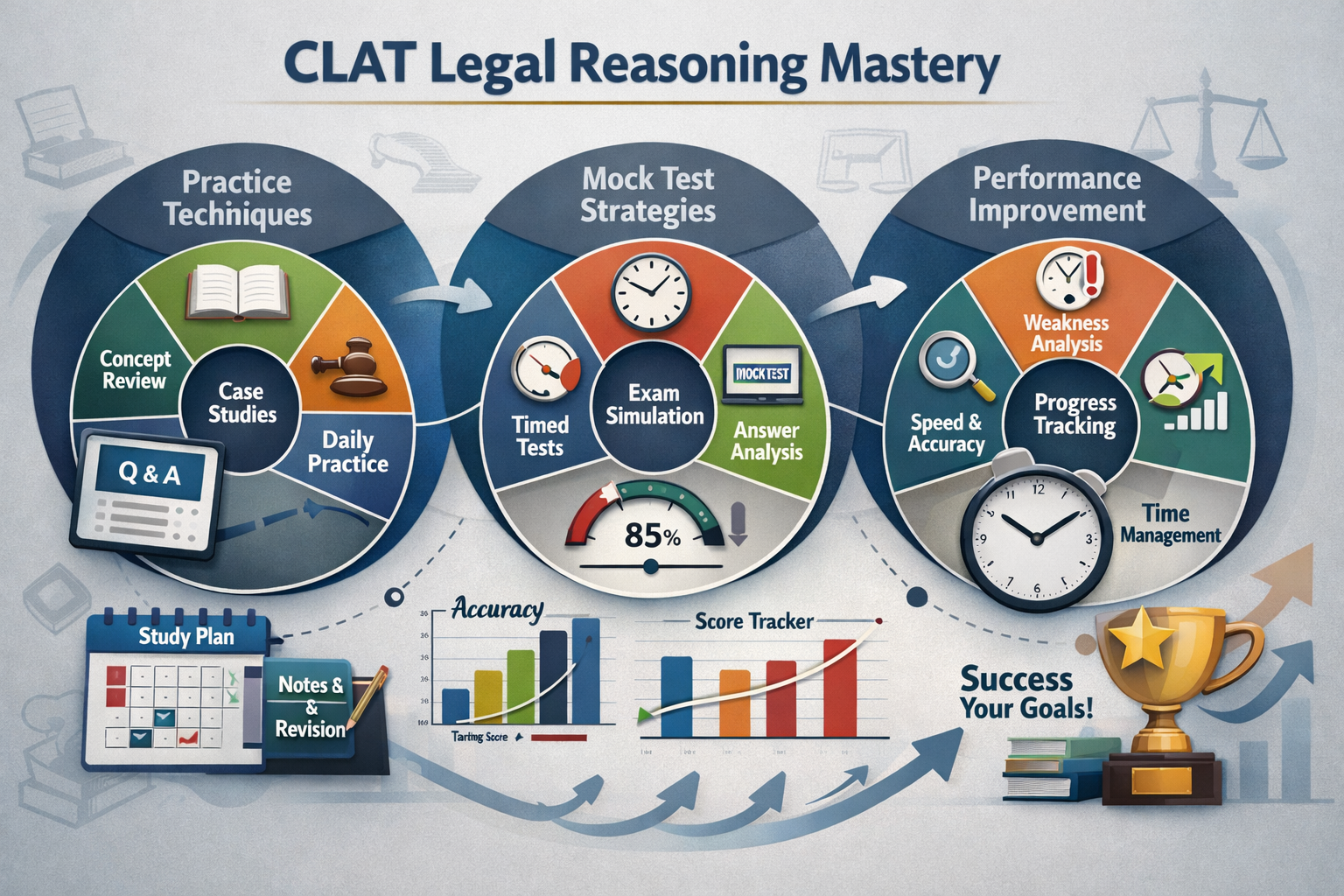
Understanding contemporary legal challenges is just the beginning. The real challenge lies in developing the skills and strategies necessary to excel within the constraints of a competitive examination. The CLAT 2027 exam was held on December 7, 2025, from 2 PM to 4 PM[1][2], giving candidates just 2 hours total to complete all 120 questions across five subjects[1][2]. This time pressure makes strategic preparation absolutely essential.
The Science of Passage-Based Learning
Modern CLAT legal reasoning operates entirely through passage-based questions, fundamentally changing how you should approach preparation. Each passage typically contains 400-600 words of complex legal content, followed by 5-6 questions that test different aspects of legal reasoning.
Passage Analysis Framework:
- Speed Reading with Purpose (60-90 seconds): Don’t read every word—scan for legal issues, stakeholders, and competing interests. Look for signal words like “however,” “nevertheless,” “on the other hand” that indicate conflicting positions.
- Issue Spotting (30 seconds): Identify the core legal question. Is this about constitutional rights, statutory interpretation, procedural fairness, or policy balancing? Most passages involve 2-3 interconnected legal issues.
- Stakeholder Mapping (30 seconds): Quickly identify all parties and their positions. Modern legal reasoning often requires understanding multiple perspectives rather than finding single correct answers.
- Question Strategy (3-4 minutes per question): Approach each question with the understanding that answers often require applying legal principles rather than recalling specific facts from the passage.
Mock Test Mastery: Beyond Practice Makes Perfect
The most successful CLAT aspirants don’t just take mock tests—they use them strategically to develop legal reasoning intuition. Here’s what separates top performers from the rest:
Analytical Mock Test Approach:
After each legal reasoning section, conduct a detailed analysis:
- Which types of legal scenarios challenged you most?
- Did you struggle with constitutional law applications, statutory interpretation, or ethical reasoning?
- Were your errors due to time pressure, misunderstanding legal principles, or misreading passages?
Track patterns across multiple mocks. Students often discover they excel at constitutional law questions but struggle with commercial law scenarios, or they handle ethical dilemmas well but falter on procedural issues. This data becomes invaluable for targeted improvement.
Time Allocation Strategy:
With 30 legal reasoning questions typically spread across 5-6 passages, you have approximately 18 minutes for the entire section. Successful students allocate:
- 2-3 minutes per passage for initial reading and analysis
- 45-60 seconds per question
- 2-3 minutes for review and educated guessing
This timing seems aggressive, but it’s achievable when you develop pattern recognition for legal reasoning structures. Effective mock test strategies can accelerate this skill development significantly.
Building Legal Intuition Through Diverse Practice
Contemporary CLAT demands what legal professionals call “legal intuition”—the ability to quickly grasp legal issues and apply relevant principles without extensive deliberation. This skill develops through exposure to diverse legal scenarios across multiple domains.
Constitutional Law Applications: Practice with cases involving fundamental rights conflicts, federalism issues, and separation of powers. Focus on scenarios where constitutional principles compete rather than clear-cut violations.
Commercial and Corporate Law: Understand basic principles of contract law, company law, and commercial disputes. These often appear in CLAT passages involving business ethics and regulatory compliance.
Environmental and Social Justice: Contemporary CLAT frequently features environmental law, social justice issues, and human rights scenarios. These passages often require balancing individual rights against collective welfare.
Technology and Privacy: Develop familiarity with data protection, intellectual property, and technology regulation. These emerging areas increasingly feature in CLAT passages.
Criminal Law and Procedure: While less prominent than constitutional law, criminal law scenarios still appear, particularly those involving procedural fairness and rights of the accused.
Advanced Techniques for Complex Scenarios
The most challenging CLAT legal reasoning questions involve scenarios where multiple legal principles apply simultaneously, requiring sophisticated analysis to determine the best answer.
Principle Hierarchy Method: When multiple legal principles seem applicable, prioritize constitutional principles over statutory provisions, fundamental rights over policy considerations, and specific rules over general principles.
Elimination Through Legal Logic: Use legal reasoning to eliminate obviously incorrect options. If an answer choice violates basic constitutional principles or established legal precedents, eliminate it regardless of how the passage might be interpreted.
Context-Sensitive Application: The same legal principle might apply differently in different contexts. Constitutional privacy rights operate differently in criminal investigations versus commercial data collection. Develop sensitivity to contextual factors that influence legal analysis.
Integration with Overall CLAT Strategy
Legal reasoning preparation cannot exist in isolation from your overall CLAT strategy. The analytical skills you develop for legal reasoning enhance performance in logical reasoning and reading comprehension sections as well.
Consider how comprehensive CLAT preparation approaches integrate legal reasoning with other sections. The logical thinking skills required for legal analysis directly support quantitative reasoning, while the reading comprehension abilities necessary for complex legal passages enhance performance across all sections.
Cross-Section Skill Transfer:
- Legal reasoning develops analytical thinking that benefits logical reasoning
- Complex passage comprehension skills transfer to reading comprehension
- Ethical reasoning abilities support current affairs analysis
- Time management skills developed in legal reasoning apply across all sections
Maintaining Motivation Through Challenging Preparation
Legal reasoning preparation can be intellectually demanding, particularly when grappling with complex contemporary issues that don’t have clear-cut answers. Maintaining motivation throughout your CLAT journey becomes crucial for sustained improvement.
Remember that struggling with complex legal scenarios is normal and necessary for growth. The most successful CLAT aspirants embrace the challenge of contemporary legal reasoning rather than seeking shortcuts or oversimplified approaches. Your success is our mission, and developing genuine legal reasoning abilities—rather than just exam-taking tricks—prepares you not only for CLAT success but for meaningful contributions to the legal profession.
The investment you make in mastering contemporary legal reasoning pays dividends far beyond the examination hall. These skills form the foundation of legal thinking that will serve you throughout law school and your eventual legal career.
Conclusion
Mastering Legal Reasoning for CLAT 2027: From Theory to Application-Based Case Studies represents more than just exam preparation—it’s about developing the analytical mindset that defines successful legal professionals. The transformation of CLAT’s legal reasoning section reflects the legal profession’s evolution, demanding aspirants who can navigate complex ethical dilemmas, apply constitutional principles to emerging technologies, and balance competing interests in an increasingly complex world.
The evidence is clear: traditional memorization-based approaches no longer suffice. With 25% of the exam weightage riding on legal reasoning[1], success requires mastering contemporary legal challenges through Supreme Court judgments, environmental law applications, data privacy scenarios, and AI regulation frameworks. These aren’t abstract academic exercises—they’re the real legal frontiers that tomorrow’s lawyers must navigate.
Your path forward involves three critical elements: developing analytical frameworks for complex legal scenarios, practicing with diverse contemporary case studies, and building the time management skills necessary for passage-based questions. The students who excel understand that legal reasoning isn’t about finding the “right” answer—it’s about applying legal principles thoughtfully to novel situations.
The journey from theoretical understanding to practical application requires dedicated practice with real legal scenarios. Start by analyzing recent Supreme Court judgments, particularly those involving technology, privacy, and environmental law. Practice identifying competing interests and legal principles in contemporary news stories. Most importantly, approach each practice session with the mindset of a legal professional, not just an exam candidate.
Your next steps are clear: Begin incorporating contemporary legal scenarios into your daily practice routine. Focus on understanding the reasoning behind legal principles rather than memorizing their applications. Develop comfort with ambiguity—the best legal minds thrive in situations where multiple valid perspectives exist.
The legal profession needs thoughtful, analytically skilled professionals who can address society’s evolving challenges. By mastering legal reasoning for CLAT 2027 through contemporary case studies, you’re not just preparing for an examination—you’re developing the skills that will define your contribution to justice and society. Your success is our mission, and this comprehensive approach to legal reasoning preparation ensures you’re ready not only for CLAT success but for meaningful impact in the legal profession.
Take the first step today. Begin analyzing a recent Supreme Court judgment, identify the competing interests involved, and practice applying those principles to similar scenarios. Your future as a legal professional starts with mastering the art of legal reasoning in our contemporary world.
References
[1] 2026 Details – https://www.lawpreptutorial.com/blog/clat/2026-details/[2] Clat 2025 Entrance Exam – https://www.gngroup.org/blogdetail/CLAT-2025-Entrance-Exam
[3] Clat 2026 Dates Application Syllabus Preparation Tips Nlus – https://law.careers360.com/articles/clat-2026-dates-application-syllabus-preparation-tips-nlus
[4] Law Breaking News Clat 2026 Result To Be Revised New Counselling Schedule To Be Out Soon Blogid 221206 – https://www.shiksha.com/news/law-breaking-news-clat-2026-result-to-be-revised-new-counselling-schedule-to-be-out-soon-blogId-221206
[5] Clat 2026 Latest Updates And Instructions – https://www.nls.ac.in/news-events/clat-2026-latest-updates-and-instructions/
[6] Clat 2026 – https://consortiumofnlus.ac.in/clat-2026/
[7] Clat 2026 Exam Date Eligibility Syllabus Registration Pattern Tips Cutoff – https://sageuniversity.edu.in/blogs/clat-2026-exam-date-eligibility-syllabus-registration-pattern-tips-cutoff
[8] Allahabad Hc Clat 2026 Two Answers One Question – https://www.scconline.com/blog/post/2026/02/05/allahabad-hc-clat-2026-two-answers-one-question/
[9] Clat 2026 Third Merit List Postponed After Allahabad Hc Orders Revision Of Results – https://law.careers360.com/articles/clat-2026-third-merit-list-postponed-after-allahabad-hc-orders-revision-of-results
SEO Meta Title: Mastering Legal Reasoning CLAT 2026: Theory to Case Studies
SEO Meta Description: Master CLAT 2026 legal reasoning through contemporary case studies, Supreme Court judgments, and application-based practice. Expert strategies for success.