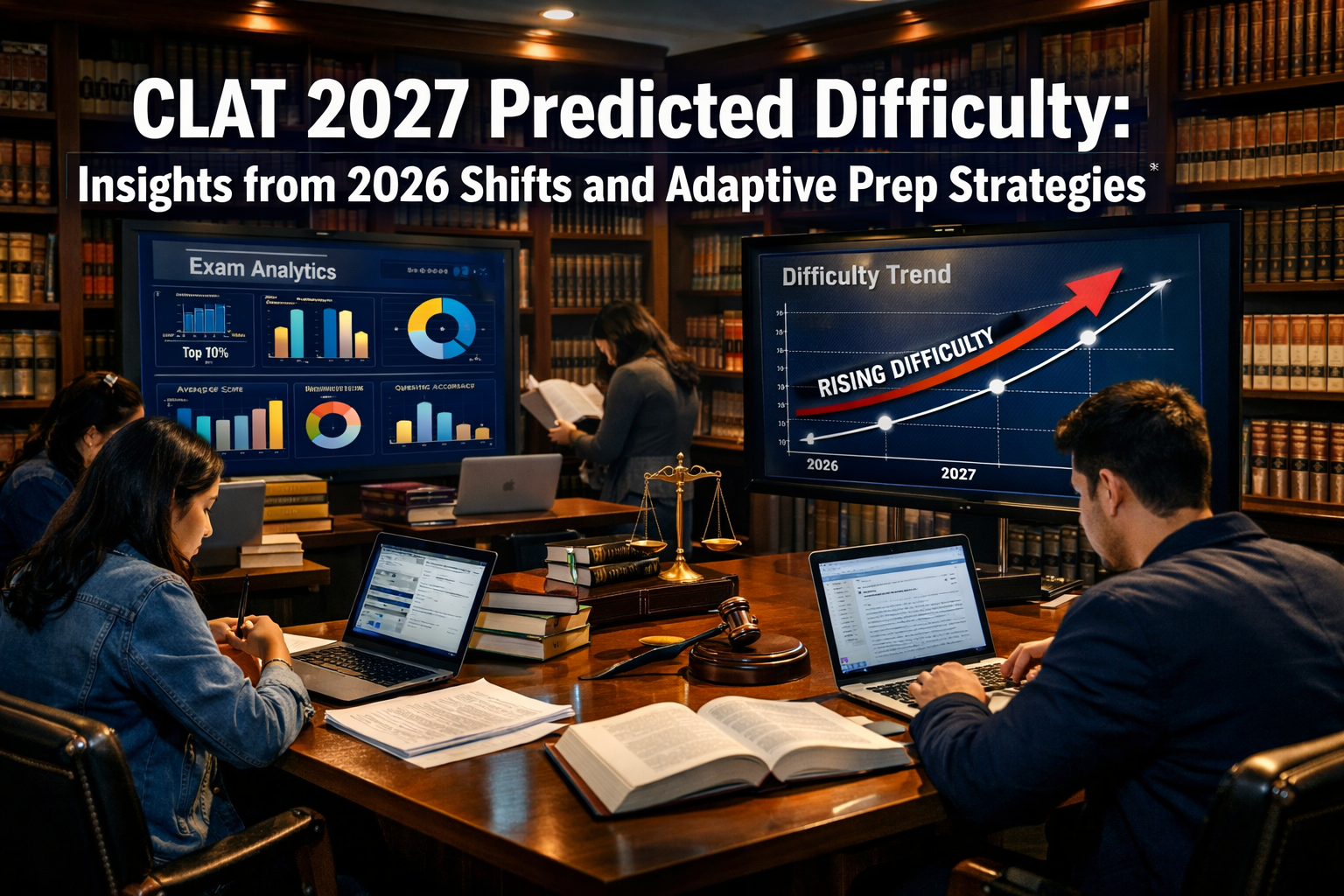
The legal education landscape is shifting, and CLAT 2027 aspirants need to prepare for what could be the most strategically challenging exam yet. With CLAT 2026 setting a moderate-to-tough benchmark and an expert committee now reviewing the entire exam framework, understanding CLAT 2027 predicted difficulty: insights from 2026 shifts and adaptive prep strategies becomes crucial for your success.
Here’s what makes 2027 different: the Consortium of NLUs has appointed a specialized committee to evaluate question quality, syllabus relevance, and alignment with international legal education standards[1]. This isn’t just another routine update—it’s a comprehensive overhaul that could reshape how future lawyers are selected.
But here’s the thing. While others worry about these changes, smart aspirants see opportunity. The key lies in building adaptive preparation strategies that work regardless of difficulty fluctuations.
Key Takeaways
• CLAT 2027 difficulty is expected to increase moderately based on 2026’s pattern and the expert committee’s mandate to align with international standards
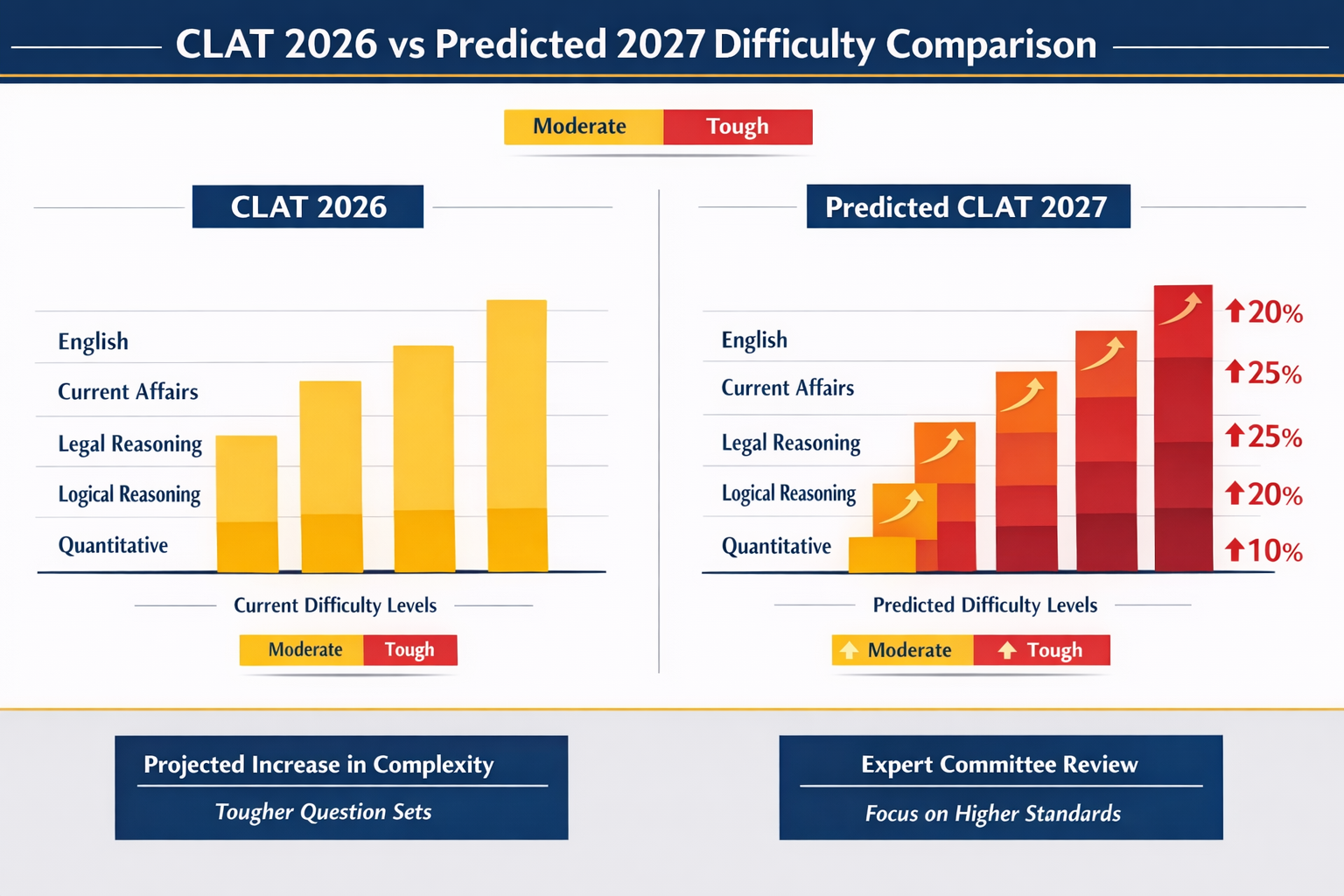
• Five core sections maintain their weightage: English Language (20%), Current Affairs/GK (25%), Legal Reasoning (25%), Logical Reasoning (20%), and Quantitative Techniques (10%)[1]
• Adaptive mock test strategies focusing on varying difficulty levels will be essential for building exam resilience
• December 6, 2026 exam date provides a clear timeline for structured preparation with registration opening August 1, 2026[1]
• Expert committee review suggests potential question quality improvements and syllabus modernization
Understanding CLAT 2027 Predicted Difficulty: Insights from 2026 Shifts and Adaptive Prep Strategies
The 2026 Benchmark: What Changed the Game
CLAT 2026 surprised many aspirants with its moderate-to-tough difficulty curve. The exam maintained its 120 questions across five sections but introduced subtle complexity shifts that caught unprepared students off guard[1].
English Language passages became more nuanced, requiring deeper comprehension skills rather than surface-level reading. Legal Reasoning sections featured more contemporary legal scenarios, while Logical Reasoning introduced puzzle-based questions that tested analytical thinking beyond traditional formats.
The puzzle shock in CLAT 2026 logical reasoning demonstrated how quickly exam patterns can evolve. Students who relied on rote learning struggled, while those with adaptive thinking skills thrived.
Expert Committee’s Impact on 2027 Difficulty
The newly formed expert committee isn’t just tweaking question papers—they’re reimagining legal aptitude assessment. Their mandate includes[1]:
- Modernizing syllabus content to reflect contemporary legal practice
- Improving question quality for better discrimination between candidates
- Aligning with international benchmarks used in global law schools
- Enhancing practical legal reasoning components
This comprehensive review suggests CLAT 2027 predicted difficulty will likely increase, but in strategic ways. Expect more application-based questions, complex scenario analysis, and integrated reasoning across sections.
Section-Wise Difficulty Predictions for 2027
English Language (20% weightage)
The expert committee’s focus on international standards means more sophisticated reading passages. Expect legal journalism, policy documents, and academic legal writing to feature prominently. Strengthening English preparation strategies becomes even more critical.
Current Affairs/GK (25% weightage)
With 25% weightage, this section could see the biggest transformation. The committee’s emphasis on contemporary relevance suggests deeper integration of legal current affairs with general knowledge. Static GK might decrease while dynamic, application-based questions increase.
Legal Reasoning (25% weightage)
This section will likely become more sophisticated, featuring complex legal scenarios that require multi-step reasoning. International legal concepts and comparative law might gain prominence.
Logical Reasoning (20% weightage)
Building on 2026’s puzzle introduction, expect more varied question types that test pure analytical ability rather than pattern recognition.
Quantitative Techniques (10% weightage)
While maintaining the lowest weightage, this section might see integration with legal scenarios—think data interpretation for legal research or statistical reasoning for case analysis.
Strategic Preparation Framework for CLAT 2027 Predicted Difficulty
Building Adaptive Mock Test Strategies
Your success doesn’t depend on predicting exact question types—it depends on building resilience across difficulty levels. Here’s how smart aspirants are preparing:
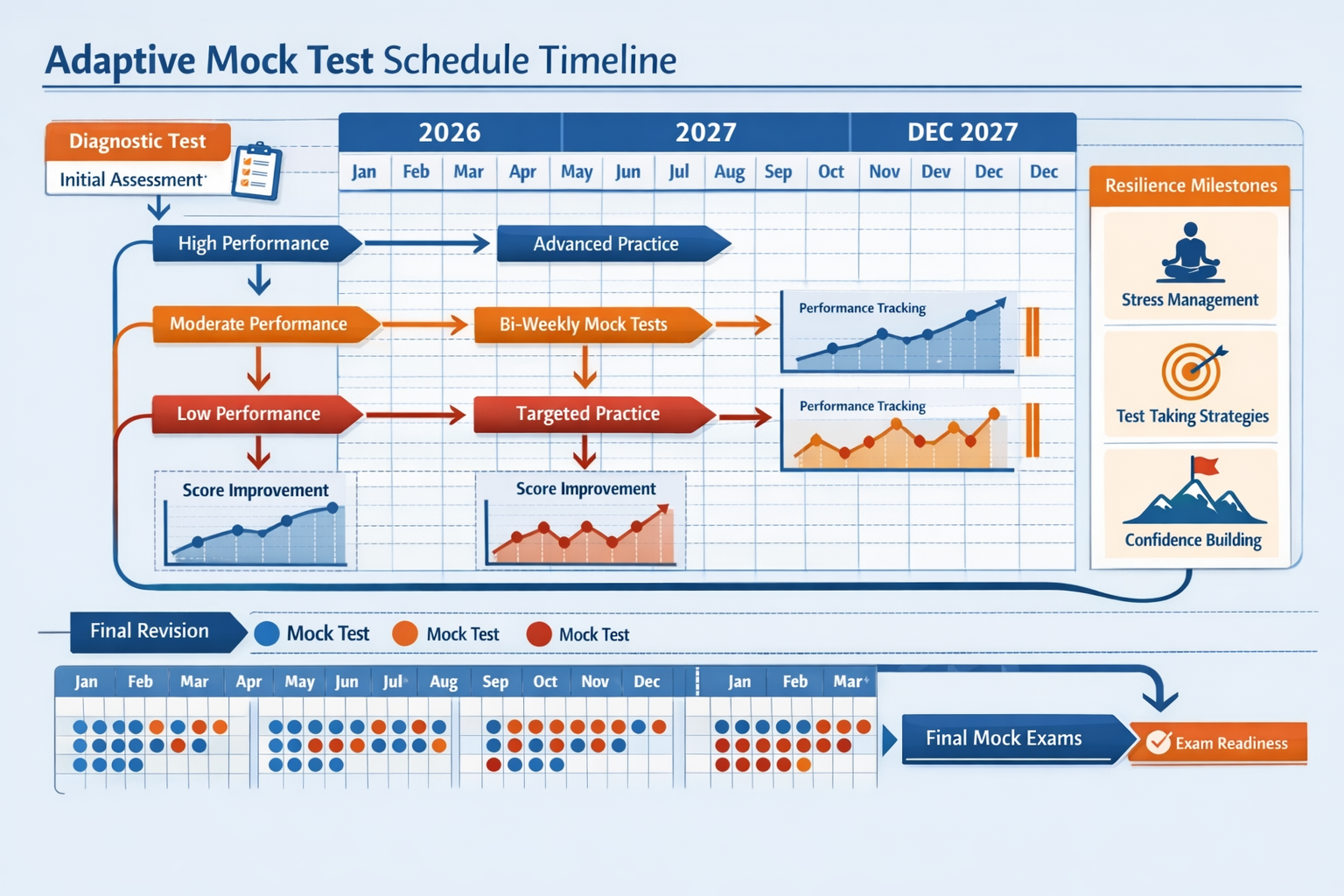
Phase 1: Foundation Building (12+ months before exam)
Start with moderate difficulty mocks to build confidence and identify baseline performance. Focus on comprehensive syllabus mastery before attempting complex scenarios.
Phase 2: Difficulty Escalation (6-12 months before exam)
Gradually introduce tougher mock tests that exceed expected difficulty. This builds mental resilience and prevents exam day surprises. The key is consistent practice with strategic mock test approaches.
Phase 3: Adaptive Testing (3-6 months before exam)
Mix easy, moderate, and tough mocks randomly. This trains your brain to quickly assess and adapt to varying difficulty levels—exactly what CLAT 2027 might demand.
Flexible Learning That Fits Your Life
The beauty of modern CLAT preparation lies in accessibility. You don’t need expensive coaching to master adaptive strategies. Quality online guidance can provide the mentorship and resources needed for success.
Personalized Study Plans
Your preparation should adapt to your strengths and weaknesses, not follow a cookie-cutter approach. Regular assessment helps identify areas needing attention while building on existing strengths.
Expert Guidance Without Premium Prices
Real mentors from top NLUs understand both the exam’s evolution and practical preparation challenges. They’ve helped thousands crack CLAT using proven strategies that actually work.
Section-Specific Adaptive Strategies
For English Language Evolution
- Practice with diverse text types: legal journalism, policy papers, international law articles
- Develop speed reading without comprehension loss using proven techniques
- Focus on inference and critical analysis skills
For Enhanced Current Affairs Integration
- Move beyond newspaper reading to analytical understanding
- Master current affairs preparation through strategic resource selection
- Connect legal developments with broader socio-political contexts
For Advanced Legal Reasoning
- Study contemporary legal cases and their reasoning
- Practice multi-step logical analysis
- Understand legal principles through practical application
Maximizing Success with Adaptive CLAT 2027 Preparation
The Mental Resilience Factor
CLAT 2027 predicted difficulty isn’t just about harder questions—it’s about handling uncertainty and pressure. Building mental resilience becomes as important as subject mastery.
Stress Management Through Preparation
Flexible learning approaches reduce anxiety by allowing you to study at your own pace while maintaining comprehensive coverage. When you’re confident in your preparation method, exam day stress decreases significantly.
Building Exam Day Adaptability
Practice switching between different question types quickly. Train yourself to identify question difficulty levels and allocate time accordingly. This skill becomes crucial when facing an unpredictable exam pattern.
Leveraging Technology for Better Preparation
Modern CLAT preparation benefits from technology integration. Online platforms provide:
- Real-time performance analytics to track improvement across sections
- Adaptive question banks that adjust difficulty based on your performance
- Peer comparison to understand your competitive position
- Expert feedback for continuous improvement
Creating Your Personal Success Timeline
August 2026: Registration and Strategy Finalization
When CLAT 2027 registration opens, ensure your preparation strategy aligns with the latest syllabus updates and pattern changes.
September-November 2026: Intensive Practice Phase
Focus on quality revision over quantity while maintaining consistent mock test performance.
December 2026: Final Preparation
Use proven revision techniques to consolidate learning while maintaining peak performance levels.
The Lawgic Advantage: Your Success Partner
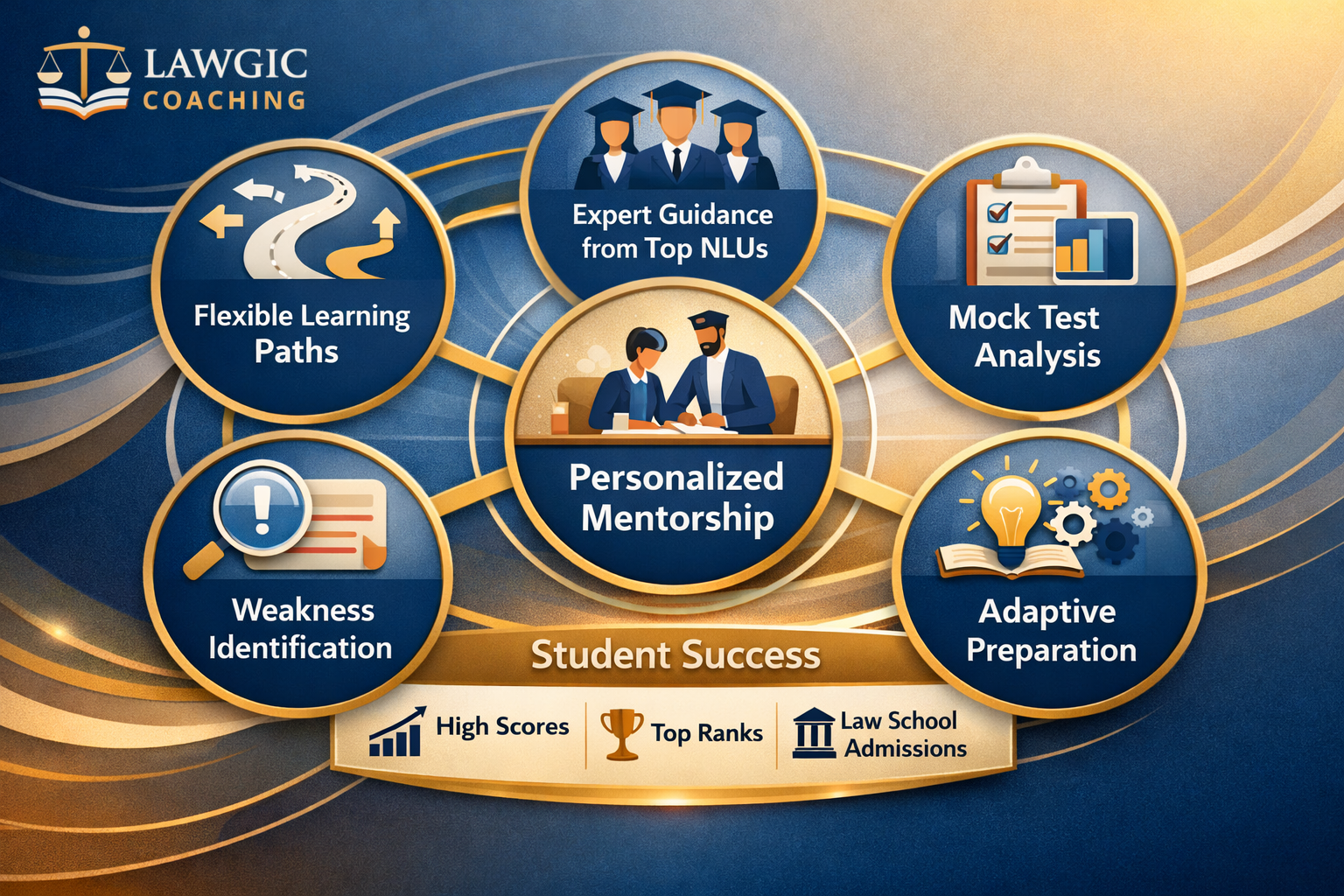
Here’s what makes the difference: personalized attention you deserve combined with expert guidance from faculty who’ve actually taught at top NLUs. No corporate jargon, no robotic responses—just real mentors who understand your journey.
Proven Track Record
Results speak louder than promises. Students consistently achieve their target NLU admissions through structured, adaptive preparation methods that work across difficulty levels.
Accessible Excellence
Quality legal education shouldn’t break your budget. Expert guidance without premium price tags means serious aspirants can access the mentorship they need for success.
Community Support
Supportive study communities provide motivation and peer learning opportunities that enhance individual preparation efforts.
Conclusion
CLAT 2027 predicted difficulty: insights from 2026 shifts and adaptive prep strategies points toward a more sophisticated, application-focused exam that rewards deep understanding over superficial preparation. The expert committee’s review process signals positive changes that will better prepare future lawyers for contemporary legal practice.
Your success strategy should focus on building adaptive capabilities rather than predicting exact question types. Start with comprehensive foundational preparation, gradually increase difficulty levels, and maintain consistent practice across all sections.
Remember, every challenge creates opportunity. While others worry about increased difficulty, you can use these insights to build a preparation strategy that succeeds regardless of exam complexity. The key lies in choosing the right guidance, maintaining consistent effort, and building mental resilience alongside academic preparation.
Ready to start your adaptive CLAT 2027 preparation? Focus on understanding the complete exam structure while building the flexible study habits that lead to success. Your law career journey begins with smart preparation choices made today.
References
[1] 2027 Details – https://www.lawpreptutorial.com/blog/clat/2027-details/
SEO Meta Title: CLAT 2027 Difficulty Predictions: Expert Analysis & Prep Strategies
SEO Meta Description: Discover CLAT 2027 predicted difficulty insights from 2026 shifts. Expert analysis, adaptive preparation strategies, and success tips for aspiring law students.

