Every CLAT aspirant in 2026 faces the same brutal reality: 847 YouTube channels promising guaranteed success, 23 Telegram groups flooding phones with PDFs, Instagram reels claiming "crack CLAT in 30 days," and countless coaching platforms screaming for attention. The average student downloads 4.7GB of study material weekly but uses less than 15% effectively.
This isn't abundance. It's paralysis disguised as opportunity.
While previous generations struggled with limited resources, today's CLAT aspirants drown in infinite options. The real challenge isn't finding good content—it's filtering out everything else and building consistency within one focused ecosystem. Your success depends not on collecting more resources, but on mastering the art of strategic elimination and committed focus.
Key Takeaways
• Resource auditing eliminates 80% of distracting content that fragments your attention and kills consistency
• Single ecosystem commitment prevents the resource-hopping trap that destroys long-term progress
• Quality filtering frameworks help identify truly valuable content from marketing-heavy but substance-light materials
• Structured elimination processes create sustainable study routines that actually stick beyond initial motivation
• Ecosystem loyalty builds deeper learning patterns and measurable improvement over scattered approaches
The Hidden Cost of Resource Hopping in Modern CLAT Preparation

Resource hopping kills more CLAT dreams than difficult questions ever will. When you jump between YouTube channels, switch coaching platforms mid-preparation, or constantly hunt for "better" PDFs, you're not optimizing—you're sabotaging.
Here's what actually happens during resource hopping. Your brain never develops deep familiarity with any single teaching style or methodology. Each platform uses different terminology, explanation approaches, and practice formats. Instead of building on previous learning, you're constantly relearning the same concepts through different lenses.
The Psychology Behind Resource Addiction
Students develop what we call "resource FOMO"—the fear that somewhere out there exists the perfect PDF, the magical YouTube series, or the ultimate Telegram channel that will transform their preparation overnight. This creates an endless cycle of searching, downloading, and abandoning.
The numbers tell a stark story. Students who stick with one primary platform for six months score an average of 23 points higher in mock tests compared to those who switch resources frequently. Consistency beats variety every single time.
Common Resource Hopping Triggers
You know you're resource hopping when you find yourself constantly comparing teaching styles, downloading backup materials "just in case," or feeling anxious about missing out on some other coach's approach. These behaviors fragment your attention and prevent the deep learning necessary for CLAT success.
The solution isn't finding more resources—it's committing to fewer, better ones. Understanding your unique learning style becomes crucial when selecting your primary ecosystem, as it helps you identify which teaching approach resonates most effectively with your natural learning patterns.
Smart aspirants recognize that mastery comes from depth, not breadth. When you commit to one ecosystem, you develop familiarity with question patterns, explanation styles, and practice formats that compound over time.
Building Your Personal CLAT Study Ecosystem: The Curation Framework
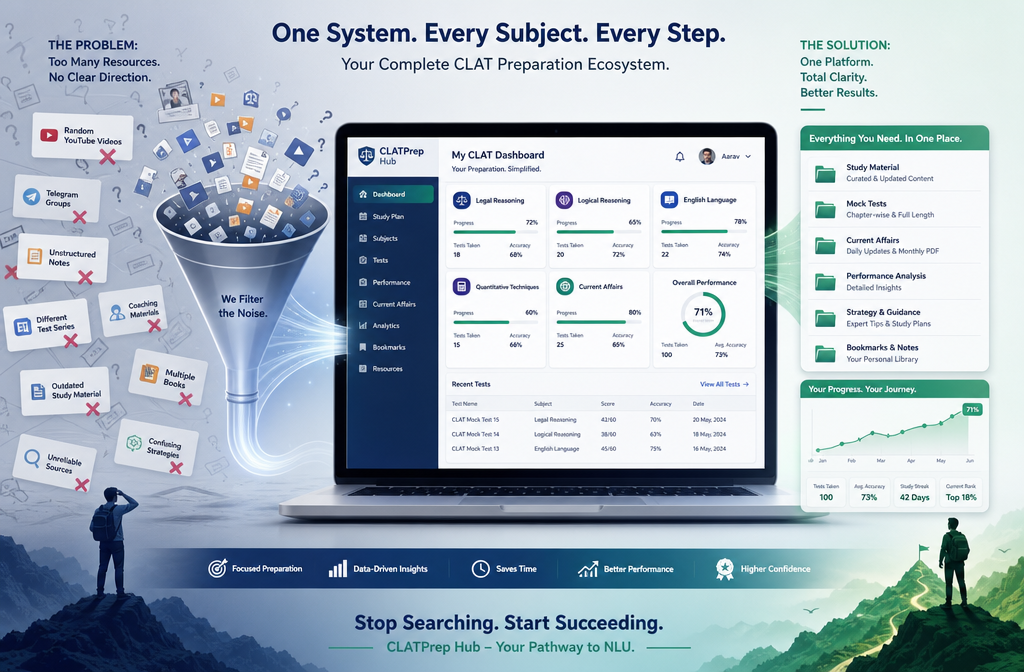
Creating your personal CLAT study ecosystem requires systematic curation, not random collection. The most successful aspirants in 2026 follow a structured framework that eliminates decision fatigue and maximizes learning efficiency.
The Three-Layer Ecosystem Model
Your ideal CLAT ecosystem should have three distinct layers: Core Platform, Supplementary Resources, and Emergency Backups. The core platform handles 70-80% of your preparation, supplementary resources fill specific gaps, and emergency backups exist only for technical failures.
Most students reverse this ratio, spreading effort equally across multiple platforms. This approach guarantees mediocrity because you never develop deep competency with any single system.
Core Platform Selection Criteria
Your core platform must offer comprehensive coverage, consistent quality, regular updates, and responsive support. It should align with your learning style and provide integrated practice opportunities. Choosing between live classes vs recorded lectures becomes a crucial decision that shapes your entire ecosystem structure.
The platform should also offer progress tracking, personalized feedback, and community features that keep you engaged long-term. Without these elements, even the best content becomes ineffective over time.
Content Quality Filters
Develop strict filters for evaluating any potential addition to your ecosystem. Quality content demonstrates recent CLAT pattern awareness, provides detailed explanations rather than quick tricks, offers sufficient practice opportunities, and comes from credible sources with proven track records.
Avoid content that promises unrealistic timelines, focuses heavily on shortcuts without building fundamentals, lacks recent updates, or comes from sources without transparent credentials. These red flags indicate marketing-heavy but education-light materials.
The 30-Day Commitment Rule
Once you select your core ecosystem, commit to using it exclusively for 30 days. This period allows you to fully understand the platform's methodology, develop familiarity with its interface, and accurately assess its effectiveness for your learning style.
During this period, resist the urge to supplement with other resources unless you identify genuine gaps. Most perceived gaps are actually learning curves that resolve with consistent engagement. Strategic planning for your CLAT preparation helps you set realistic expectations and avoid premature platform switching.
The 30-day rule prevents the common mistake of abandoning effective resources before giving them adequate time to demonstrate value.
Sustainable Filtering Strategies: From Overwhelm to Optimization
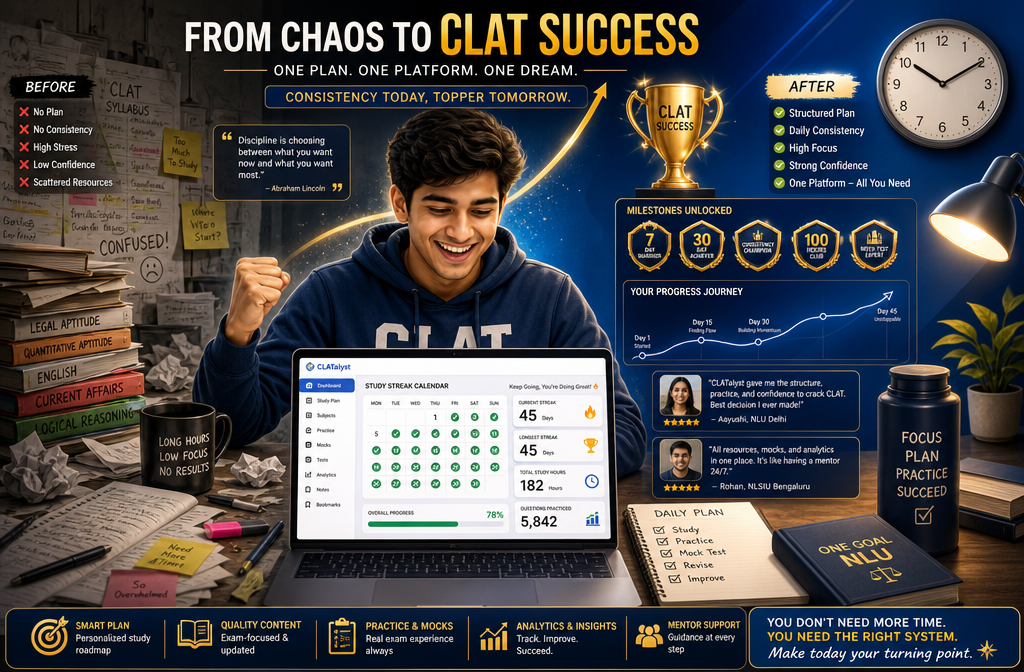
Sustainable filtering transforms overwhelming choice into focused action. The goal isn't perfection—it's creating a system you can maintain consistently while achieving steady improvement in your CLAT preparation.
The Weekly Resource Audit
Implement weekly 15-minute sessions to evaluate your current resources. Ask specific questions: Which materials did you actually use this week? Which ones contributed to genuine understanding? Which ones felt like busy work without real learning?
This audit prevents resource accumulation without conscious evaluation. Most students download materials impulsively but never systematically assess their utility. Regular audits maintain ecosystem hygiene and prevent digital clutter from undermining focus.
Quality Over Quantity Metrics
Measure resource effectiveness through concrete outcomes, not abstract feelings. Track metrics like practice test improvements, concept clarity ratings, and time-to-solution for different question types. Resources that don't contribute to measurable progress should be eliminated, regardless of their reputation or popularity.
Effective progress assessment techniques help you develop objective criteria for evaluating resource effectiveness rather than relying on subjective impressions that often mislead.
The Elimination Protocol
Create specific criteria for removing resources from your ecosystem. Eliminate materials that duplicate content you're already mastering, require excessive time for minimal learning gains, create confusion rather than clarity, or tempt you away from your core platform without compelling reasons.
Elimination isn't failure—it's optimization. Every resource you remove creates more time and mental space for deeper engagement with your core materials. This principle applies especially to avoiding common CLAT preparation mistakes that often stem from resource overload rather than resource scarcity.
Building Ecosystem Loyalty
Loyalty to your chosen ecosystem isn't blind faith—it's strategic commitment based on evidence and results. When you find a system that works, resist the temptation to constantly optimize or experiment with alternatives. Consistency compounds over time in ways that constant switching never can.
The most successful CLAT aspirants develop deep familiarity with their chosen platform's methodology, question styles, and explanation approaches. This familiarity accelerates learning and reduces cognitive load, allowing more mental energy for actual problem-solving rather than platform navigation.
Long-term Sustainability Factors
Your filtering strategy must account for changing needs throughout your preparation journey. What works in initial learning phases may need adjustment during intensive practice periods or final revision stages. Build flexibility into your system while maintaining core ecosystem stability.
Consider factors like content freshness, community engagement, technical reliability, and support responsiveness when evaluating long-term sustainability. Staying motivated throughout your CLAT journey becomes easier when your ecosystem actively supports sustained engagement rather than creating additional friction.
The goal is creating a preparation environment that feels sustainable and energizing rather than overwhelming and exhausting. When your ecosystem supports rather than hinders your natural learning patterns, consistency becomes effortless rather than forced.
Conclusion
CLAT prep in 2026 isn't about finding more study materials—it's about filtering infinite options into one focused ecosystem that actually works. The students who crack CLAT aren't those with the most resources, but those with the discipline to eliminate distractions and commit deeply to proven systems.
Resource hopping kills consistency, fragments learning, and prevents the deep familiarity necessary for CLAT success. Your brain needs time to adapt to teaching styles, question patterns, and explanation approaches. Constant switching resets this adaptation process and keeps you perpetually at surface level.
Building your personal CLAT ecosystem requires systematic curation using the three-layer model: core platform, targeted supplements, and emergency backups. Apply strict quality filters, implement the 30-day commitment rule, and conduct regular resource audits to maintain focus.
Sustainable filtering isn't about perfection—it's about optimization. Eliminate resources that duplicate existing content, create confusion, or tempt you away from your core system without compelling evidence. Loyalty to effective systems compounds over time in ways that constant experimentation never can.
The path forward is clear: audit your current resources ruthlessly, select one comprehensive ecosystem, commit to it for meaningful time periods, and resist the constant temptation to optimize. Your success depends not on collecting more materials, but on mastering fewer, better ones.
Start today. Choose your core ecosystem, eliminate everything else for the next 30 days, and experience how focused preparation accelerates real progress. Your future self will thank you for the discipline to choose depth over breadth in your CLAT preparation journey.
SEO Meta Title: CLAT Prep Resource Curation Guide 2026 | Filter Study Material